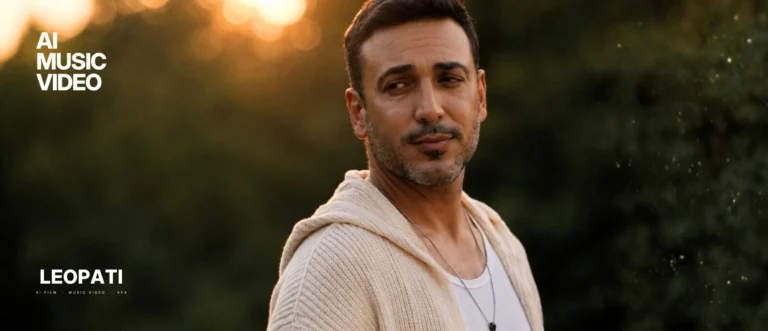
Short answer: rap and hip-hop videos run on a recognisable visual vocabulary: the artist’s presence, the city at night, the crew, cars and status objects, low angles and direct eye contact. AI can build that world at a scale a small budget cannot — the challenge is keeping it specific to the artist and the song instead of generic.
The vocabulary
- Presence: the artist framed low, centred, looking into the lens.
- Place: a real sense of city — streets, rooftops, underpasses, the artist’s own neighbourhood if the song is about it.
- Crew: the people around the artist, which in AI must stay consistent from shot to shot.
- Objects: cars, chains, clothing — meaningful when they belong to the story, empty when they are just decoration.
- Light: sodium streetlights, headlights, hard contrast, wet asphalt.
Avoiding the generic
Models have seen thousands of rap videos and will happily produce the average of them. Specificity comes from the lyrics: a named place, an era, a personal symbol. We build the visual brief from the words of the song first, then from references.
Examples
DJ Orcun & Sacha Max — King uses night city, cars and a luxury hotel to carry a confident, urban mood. Killa Hakan — Yanlış Kardeşler keeps the artist’s recognisable look — sunglasses, beanie, tactical vest — consistent across the video.
Start with the lyrics
Send the track and the words; we will return a concept rooted in the song. More on our AI music video production page.
Frequently asked questions
Can AI make a rap video look authentic?
Yes, when the visual brief comes from the song and the artist’s world. Generic prompts produce generic videos.
Can the artist’s real look be kept?
Yes — through approved reference images and consistency control, or by filming the artist and building the world around them.
Which rap video you made is a good example?
Killa Hakan — Yanlış Kardeşler and DJ Orcun & Sacha Max — King are both in our portfolio.
Related guides
This work at Leopati
Service: AI Music Video Production