A historical AI film is more than old-looking images
In biography and historical film production, a cinematic look is not enough on its own. Even when a scene looks like a period film, the character’s clothing, the architecture, the tools, the light, the geography or the order of events can contradict historical reality. That is why historical film production with AI has to pursue two goals together: visual continuity and faithfulness to the sources.
AI generation does not fill in missing or uncertain information correctly by itself. On the contrary, it requires a detailed study of the sources and a clear separation between what is certain and what is interpretation.
A research file for historical accuracy
The first step is to build a source file. It can hold biographies, historical documents, academic studies, photographs, architectural references, maps, costume examples, period objects and the facts the story will rely on. Every scene is noted with the source or the creative interpretation it is based on.
| Research area | Check question |
|---|---|
| Character | Which sources exist for the face, age, clothing and period of life? |
| Location | Which geography and architectural features is the scene based on? |
| Period | Are the clothing, objects, tools and light right for the period? |
| Event | Is the scene a real event or a creative dramatisation? |
| Sound | Which source are the language, tone and text of the narration based on? |
| Visual interpretation | Where the source is not certain, is the creative decision stated openly? |
How are the character and the period world locked?
A historical character is more than a face reference. The character’s age, clothing, hair and beard, body language, status and change across scenes have to be defined. The period world is also turned into a visual system of architecture, fabric, objects, natural surroundings, light, colour and atmosphere.
This system is checked against the same reference set throughout scene production. Instead of making each shot “beautiful” on its own, the question is whether the shots belong together. In a historical film, a wrong detail shown to the audience can create a bigger trust problem than a short visual effect is worth.
The St. Nicholas example
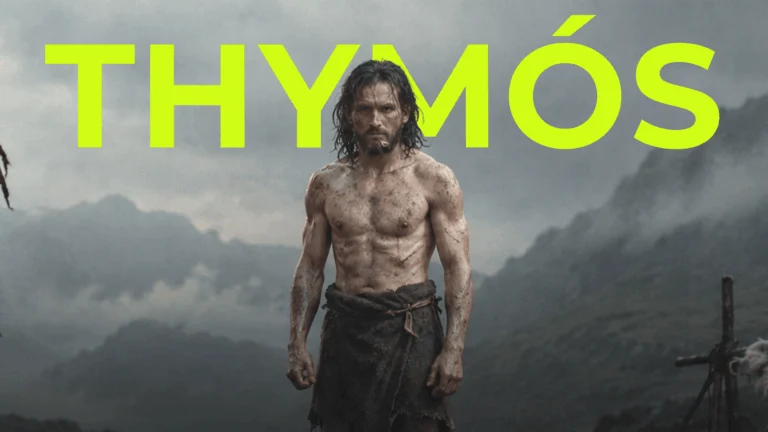
Leopati’s St. Nicholas AI biography film case study focuses on building a historical character in a consistent period world across four scenes. The AI film production service page describes the project’s scope: a 1:33 runtime, four scenes, a 27-day production, AI narration, character design, historical reconstruction, sound design and post-production.
A project like this is worth far more than a one-sided claim such as “making a historical film with AI is fast”, because it makes the real production problem and the scope of the solution visible.
Narration and trust in the story
In a biography film, the narration matters as much as visual accuracy. The narration text should be based on sources, certain facts should be kept apart from interpretation, and the tone of voice should fit the film’s goal. If an AI voice is used, the right to use the voice, the limits of the performance and the release scope must also be checked.
Sound design supports the atmosphere of the period or the world, but it should not be used to exaggerate a claim of reality. If the audience is given the impression that “this scene is a real recording”, transparency has to be kept between the film language and the accompanying text.
Ethics and release policy in historical AI film
When the face or voice of a real person is used, permissions and rights must be reviewed. Even when a historical character is built from public sources, the right to use images of living people or family and institutional archives can be different. The film should state clearly where documentary ends and dramatisation begins.
FAQ
Can a historical AI film be completely real? An image produced with AI is not historical reality itself; it is a visual interpretation based on sources. The film should keep this distinction clear.
How is the face of a historical character designed? Source portraits, documents and period features are studied together, and a character sheet is prepared.
Can AI narration be used? It can, depending on the project’s needs and the usage rights; the text, the voice and the release scope must be approved.
How do you start a biography film? Send Leopati the source material, the target length, the story idea and the limits of accuracy.
Sources: [1] Google AI Features · [2] Google Organization structured data
Related guides
This work at Leopati
Service: AI Film Production
Leave a comment