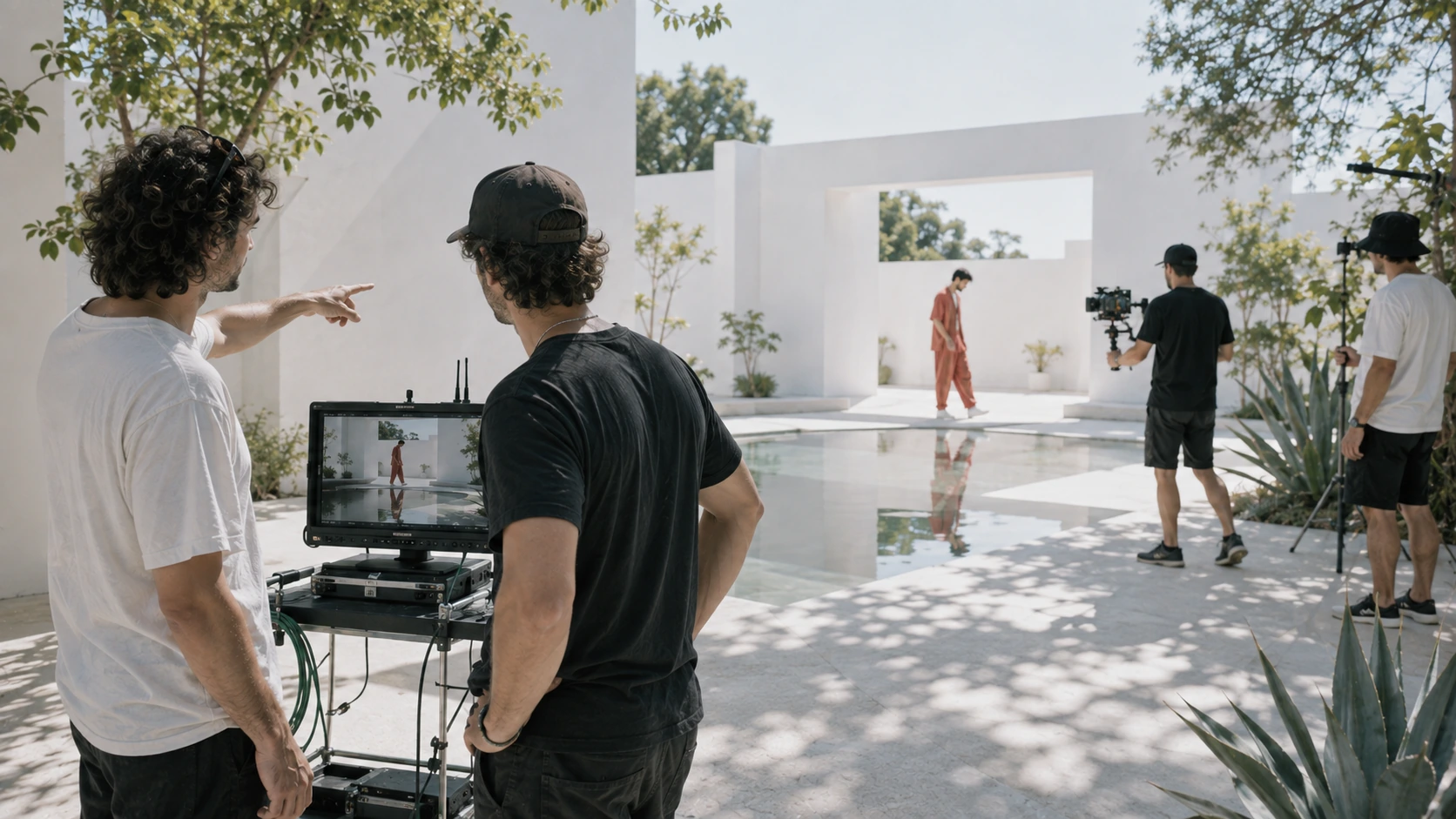
“You just type a prompt” undersells what a director’s job becomes in AI filmmaking. The tools change; the job of shaping a coherent creative vision across hundreds of decisions does not. Here’s what directing actually looks like on an AI production.
Setting the visual language before a single shot exists
A director’s first job is deciding what the film should look and feel like — color palette, camera language, pacing, tone — and locking those decisions into references the whole generation process can be measured against. Without this, every shot is a fresh guess.
Casting and character direction
Choosing a character’s look, building consistency references, and directing “performance” — expression, posture, the small choices that make a character read as a person rather than a generated image — is a creative decision made shot by shot, the same way a director would direct an actor.
Editorial judgment: what to keep, what to regenerate
Generation produces options, not final answers. Directing means having the judgment to know which take serves the story and which needs another pass — exactly the editorial instinct a director applies to dailies on a traditional set.
Pacing and structure in the edit
The final shape of a film — its rhythm, its structure, where it holds a beat and where it cuts fast — is decided in the edit, using the same craft as any other film. This is where creative direction and traditional filmmaking overlap completely.
Our St. Nicholas project is a case study in this kind of sustained creative direction across a full production. See our studio page for how we approach direction on every project.