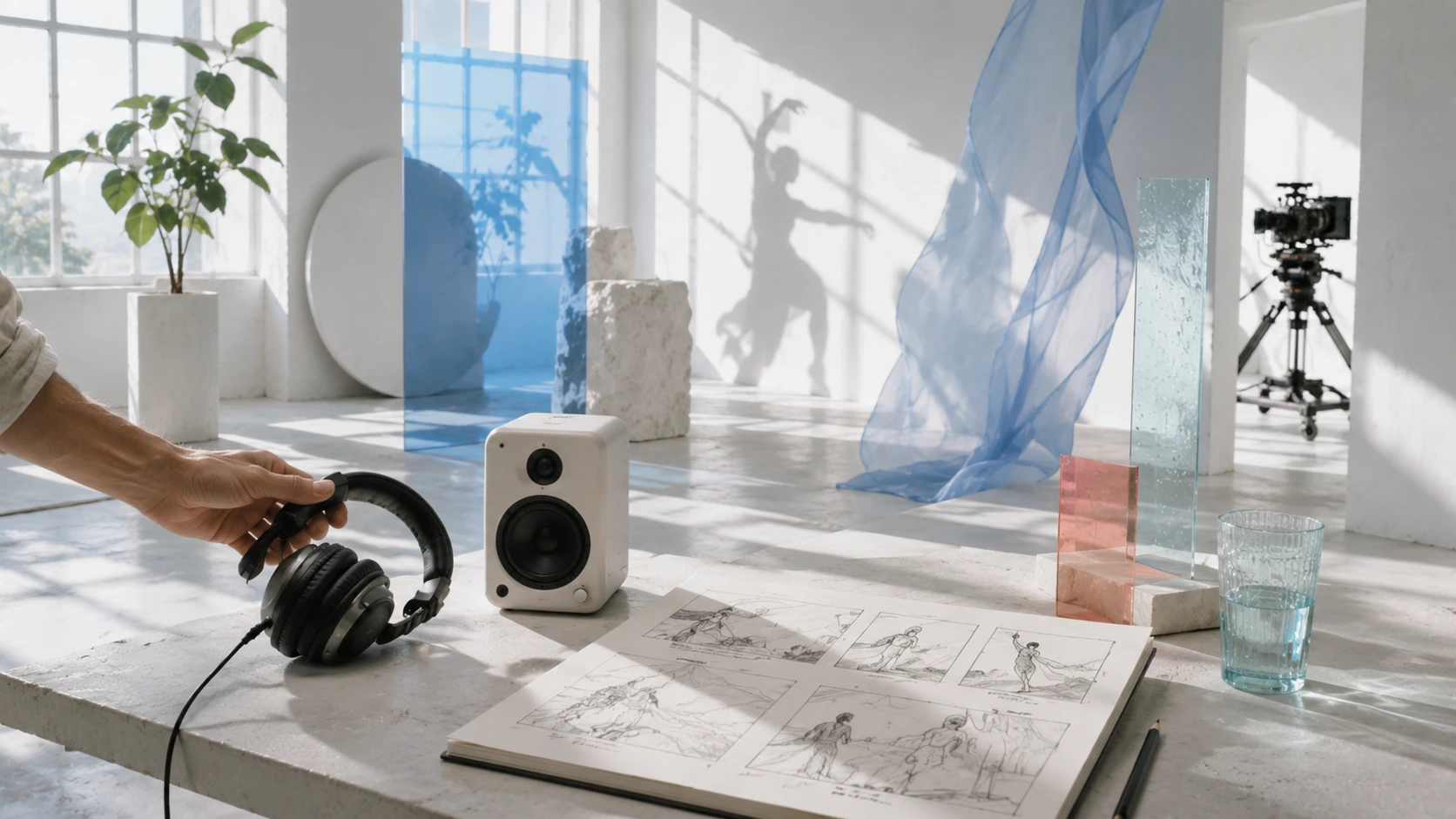
Not every genre is an equally good fit for AI filmmaking today. Some lean directly into what the technology does well right now; others fight against its current limits. Here’s an honest read on where AI filmmaking is strongest.
Historical and biographical drama
Recreating settings, costumes and figures that no longer exist or can’t be filmed practically is one of AI filmmaking’s clearest advantages — no need for period sets, costume builds or location matches. Our St. Nicholas project, a historically accurate cinematic biography, is a direct example.
Horror and atmosphere-driven pieces
Horror leans on mood, lighting and suggestion more than fast, precise physical action, which plays to current AI video strengths. Our Blair Witch sequences show how atmosphere and dread can be built convincingly through AI production.
World-building and fantasy shorts
Genres built around environments and creatures that don’t exist in reality remove the comparison point a viewer would otherwise have against real-world footage — the Zarafel project is a full example of a fantasy world built this way from nothing.
Music videos with strong visual concepts
Music videos are traditionally built around visual concept over strict physical realism, which is exactly where AI production currently performs best — see MIDIVOXX for a cinematic AI music video built around a strong concept.
Where it’s harder today: fast, precise live-action action sequences
Genres depending on split-second physical precision — hand-to-hand combat, complex stunt choreography — are still the hardest fit for current generative video, though this is the area improving fastest release over release.
See our AI film production service to talk through which approach fits your project.
Leave a comment