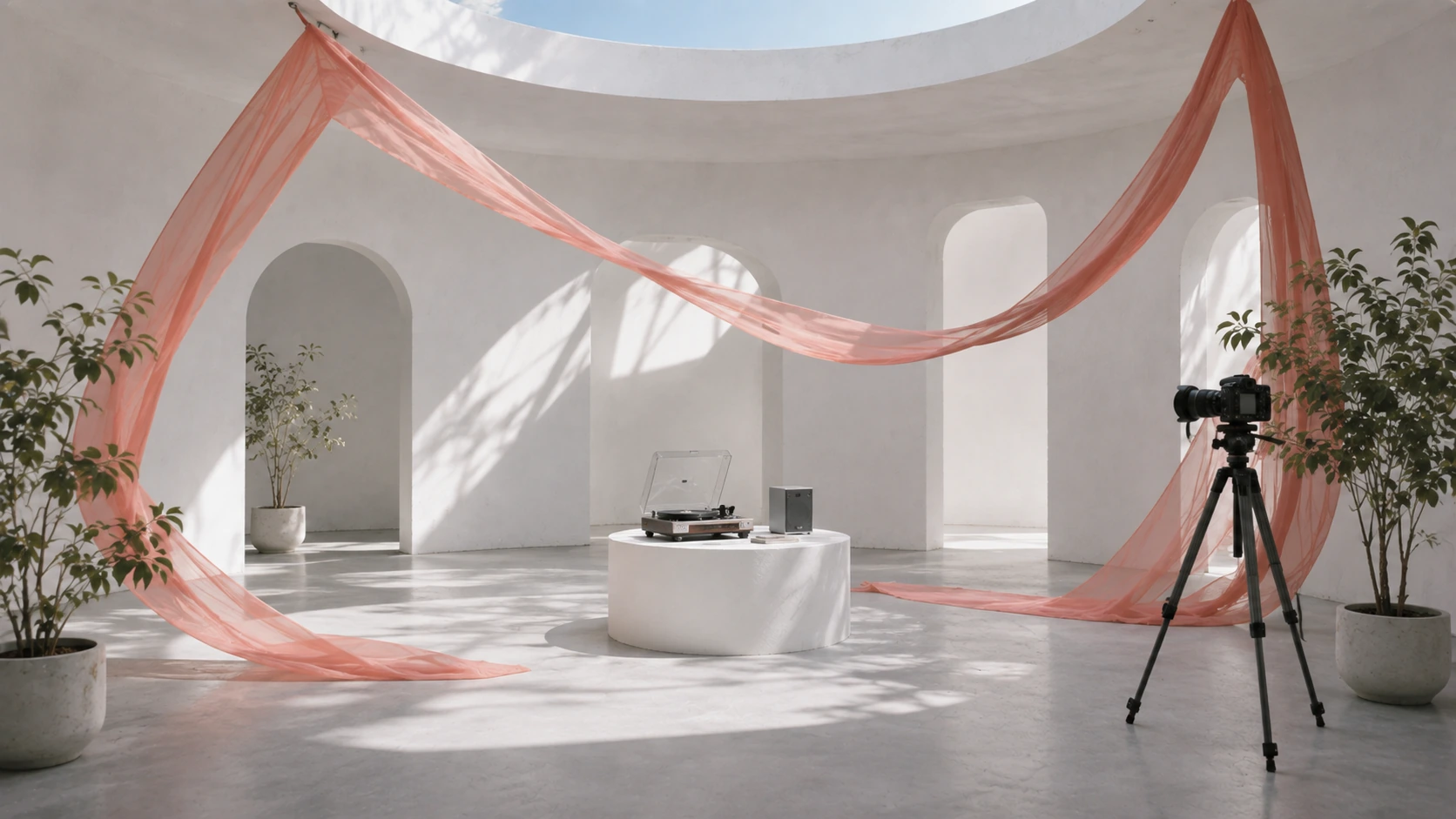
“Generative video” sounds like an engineering term, but for a marketing team it just means a different way to get a finished video: instead of booking a crew, a location and a shoot day, the footage is generated from a creative brief, reference images and iteration — then edited, graded and finished exactly like any other production.
Skip the jargon — what this means for a marketing team
You don’t need to understand diffusion models or frame interpolation to commission generative video. What matters operationally: no location scouting, no talent scheduling, no weather risk, and revisions happen in the edit rather than requiring a reshoot. The creative brief, references and approval rounds work the same way they would with a traditional production partner.
Cost and timeline vs. traditional video
A traditional shoot-based commercial involves pre-production, a shoot day (or several), and post — often four to eight weeks end to end, with crew, location and talent costs stacking up before a single frame is edited. A generative video project compresses most of that into iteration time: concept, generation passes, and finishing. Timelines are typically measured in days to a few weeks depending on complexity, and the budget shifts away from logistics and toward the creative and production time itself.
What a first project usually looks like
Most brands start small and specific: a single hero spot, a product visual sequence, or a short campaign teaser, rather than an entire campaign end to end. That gives everyone — the brand team and the studio — a clear result to evaluate before scaling up to a full AI commercial production across multiple deliverables and platform cuts.
Case example: KING
The KING project is a useful reference point for what “generative video for brands” looks like in practice: a dark, urban visual identity built and held consistent across an entire piece, produced without a physical shoot, and finished to a standard that reads as a real production rather than an experiment.
Getting started
The starting point is the same as any production brief: what the video needs to say, who it’s for, and any existing brand visual language it needs to match. From there, a studio can scope a first project, timeline and cost before any commitment. See our AI commercial production service for how we structure that first conversation.
Leave a comment