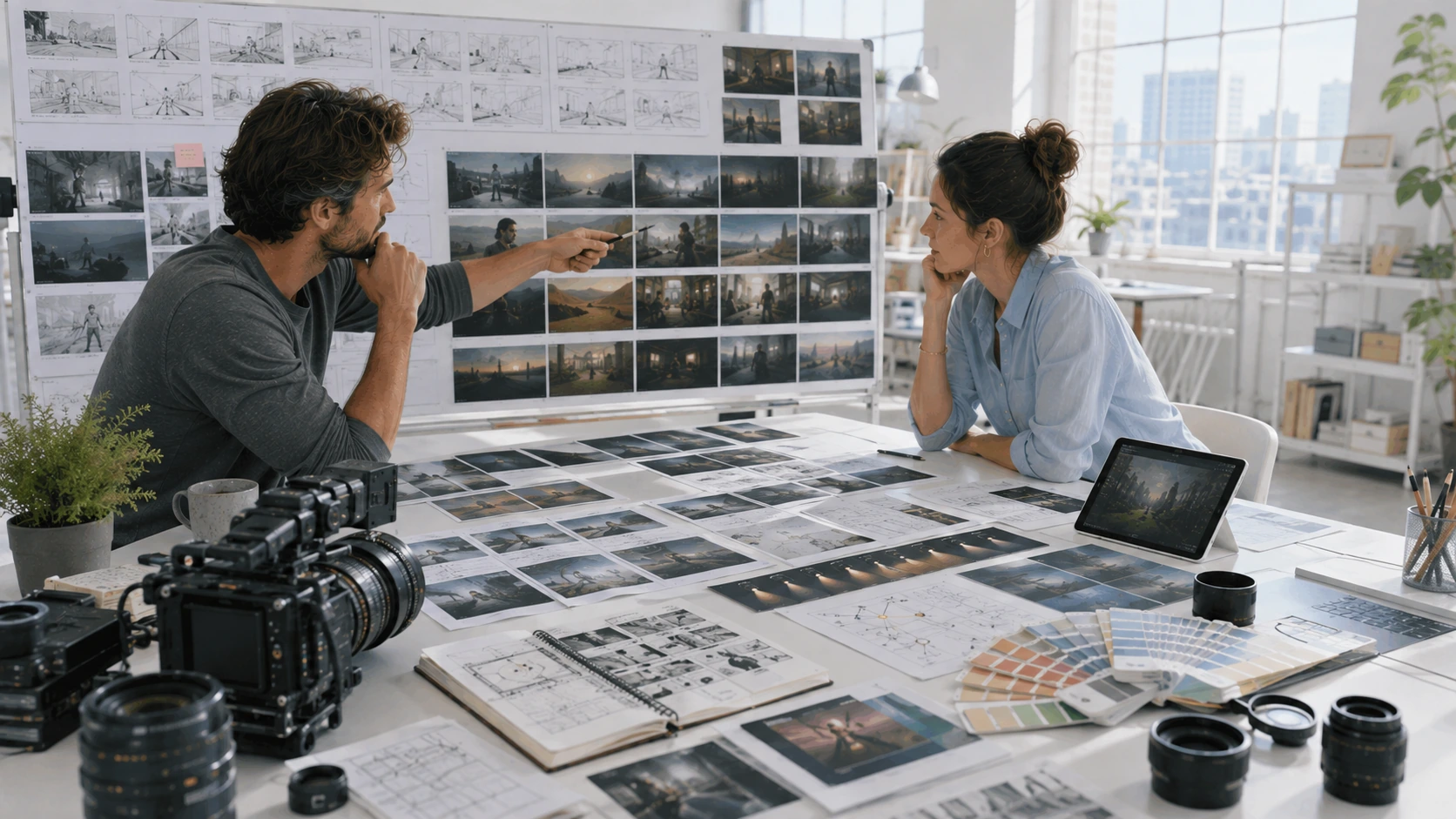
AI Music Video Ideas for Artists: 12 Production Directions That Scale
Direct answer (short): Choose one production direction that matches the track’s emotional centre — ambient, narrative, performance, or concept — then lock three production constraints (aspect ratio, character/asset continuity method, and a feasibility tier). That lets you convert one brief into multiple cuts: long-form video, vertical social edits, lyric visuals and stills.
How to use this list
Pick an idea that matches your song’s core (tempo, lyrics, emotional arc). For each idea you’ll see: a one-line creative brief, feasibility (low/medium/high effort), continuity strategy (how to keep visual elements consistent across scenes/edits), and best formats to deliver.
12 Production Directions (with production notes)
1) The Single-Shot Mood Loop
– Concept: A continuous 45–90s single-shot that evolves visually with the track (lighting, camera push, generative transitions).
– Feasibility: Medium (planning and stable frame transitions).
– Continuity: Use a repeating prop or character silhouette as an anchor; bake camera metadata for consistent AI re-renders.
– Best formats: 16:9 for full-length, 9:16 for social loop edits.
2) Micro-Narrative Sequence
– Concept: 3–5 short, connected vignettes that tell an abstract story tied to lyrics.
– Feasibility: Medium–High (multiple scenes, consistent characters).
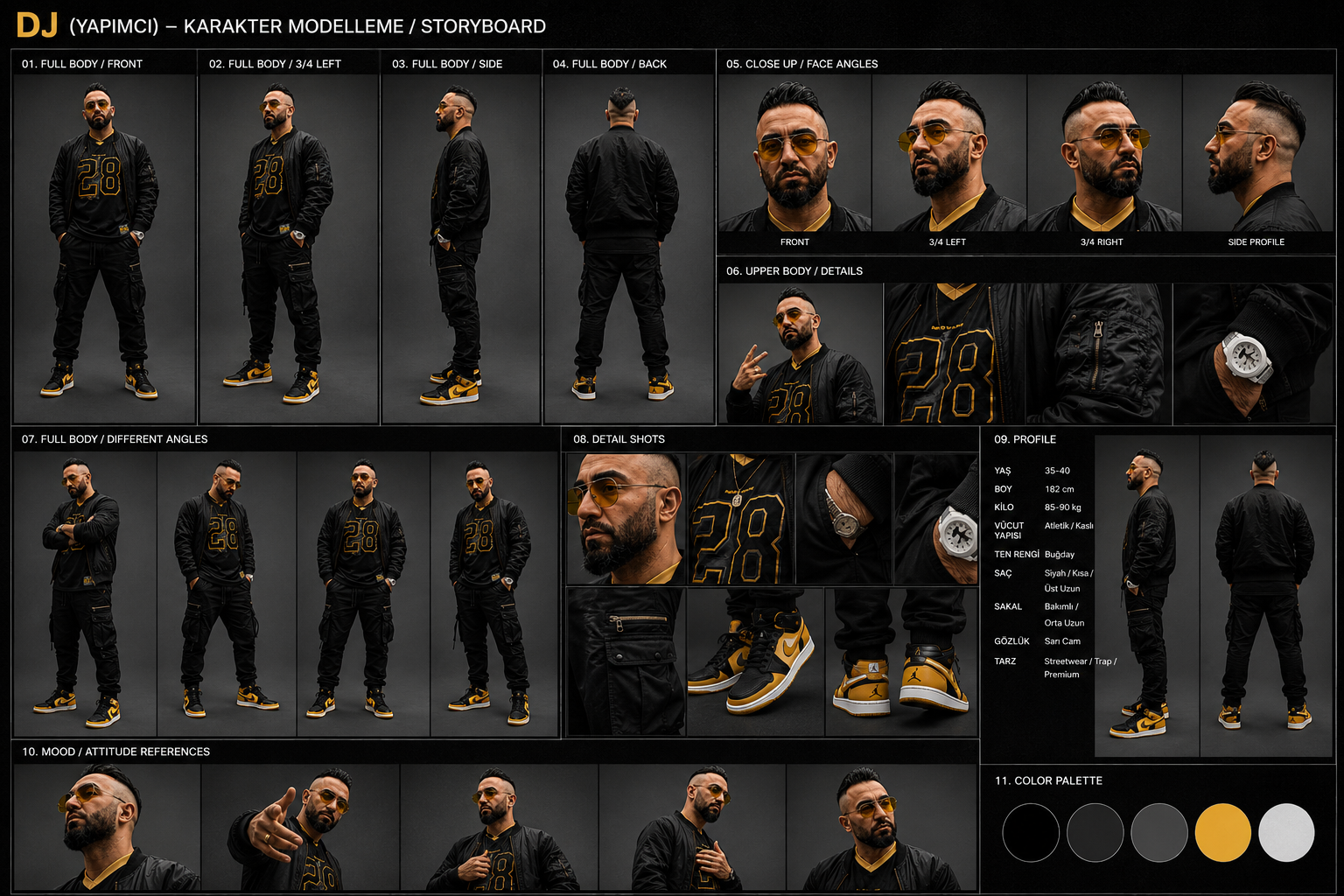
– Continuity: Create a character bible (visual attributes + gestures) and reuse it across scenes.
– Best formats: 1:1 for platforms, 2:35:1 for cinematic cut.
3) Texture & Atmosphere Collage
– Concept: Non-narrative, audio-reactive textures that mirror frequency bands and vocals.
– Feasibility: High (automation friendly).
– Continuity: Keep a recurring color palette and motion language; save procedural parameters.
– Best formats: Square/vertical short loops and full-screen ambient versions.
4) Lyric-Driven Visualizer
– Concept: Kinetic typography integrated with generative imagery that reflects lyrical moments.
– Feasibility: High (lower production complexity).
– Continuity: Typography system (font family, animation curves) and background asset set.
– Best formats: 9:16 for TikTok/Stories, 16:9 for YouTube.
5) The Dreamscape Montage
– Concept: Surreal, location-hopping montages stitched by mood rather than plot.
– Feasibility: Medium (many unique frames but weaker continuity demands).
– Continuity: Recurrent symbol or color grade to tie disparate scenes.
– Best formats: 16:9 and 2:35 for cinematic playlists.
6) Character Study (Single Protagonist)
– Concept: Follow one character through changing environments that mirror the song’s arc.
– Feasibility: Medium–High (character consistency matters).
– Continuity: Character bible plus consistent facial/pose anchors; use reference frames for AI to match.
– Best formats: 16:9 narrative cut, vertical character-focused promo clips.
7) Hybrid Live-Action + Generative Background
– Concept: Real performance footage composited into AI-generated worlds.
– Feasibility: Medium (requires clean plates and rotoscoping).
– Continuity: Keep lens metadata and lighting references; generate backgrounds from the same styleseed.
– Best formats: 16:9 master, vertical performance cuts.
8) Retro / Found-Footage Remix
– Concept: Stylized archival textures, simulated film burns and era-specific palettes.
– Feasibility: Low–Medium (primarily post style work).
– Continuity: Unified grain, color pipeline and overlay templates.
– Best formats: 4:3 or 16:9 depending on era aesthetic.
9) Interactive Branching Teaser Series
– Concept: Multiple short 10–15s clips that rearrange to change meaning — ideal for episodic social rollouts.
– Feasibility: Medium (planning for modular continuity).
– Continuity: Reusable assets (characters, props) and strict timing grid.
– Best formats: Vertical and square for social platforms.
10) Visual World-Building (Album/EP Scope)
– Concept: A visual universe that spans multiple tracks — shared locations, symbols, cast.
– Feasibility: High (bigger scope but huge scaling benefit).
– Continuity: Full visual bible (locations, costumes, color grades, assets) so AI outputs are consistent over time.
– Best formats: Episodic long-form + bite-sized promos.
11) Motion Graphic Storyboard
– Concept: Clean, stylized motion graphics that map song structure and beat hits.
– Feasibility: High (efficient and repeatable).
– Continuity: Component library (icons, transitions, easing presets).
– Best formats: All aspect ratios; easily adapted.
12) The POV / First-Person Experience
– Concept: A subjective camera that places the viewer inside the track’s emotional perspective.
– Feasibility: Medium (requires thoughtful shot design for immersion).
– Continuity: Consistent camera rig behavior and visual filters.
– Best formats: Vertical for immersive social, 16:9 for longer immersion cuts.
Choosing an approach and scaling
- Match tempo to pace: slow tempos suit long-form dreamscapes; fast tempos suit montage, lyric visuals and micro-narratives.
- Lock three constraints early: aspect ratio(s), continuity anchor (character, color, symbol), and feasibility tier (budget/time). That makes repurposing predictable and cheaper.
- Plan deliverables: master 16:9 edit, two vertical promos, 3 short clips, and still frames/thumbnail art for one idea to maximize ROI.
Tools, rights and practical constraints
AI tools can accelerate ideation and rendering but require disciplined asset control — saved prompts, seed images, and a continuity bible. Treat generative outputs as drafts: human direction, cleanup and compositing remain essential for consistent character and brand identity.
Next steps
Sketch one idea from this list into a one-page brief that lists mood references, beats to highlight, and the three locked constraints. For production workflows and example projects, see our AI Music Video Production guide (/what-to-prepare-before-starting-an-ai-music-video-project/) and the Examples collection (/examples/).
Frequently asked questions
How do I keep a generated character consistent across a full song?
Create a character bible: multiple reference images, facial ratios, costume notes, color codes and a short list of signature gestures. Use those as seed images and consistent prompt templates for every scene, and archive the seed/metadata so compositors can recreate or refine the character between renders.
Which of these ideas is best for a limited budget?
Motion Graphic Storyboard, Lyric-Driven Visualizer and Texture & Atmosphere Collage tend to be the most budget-friendly because they rely on reusable components, procedural effects and fewer unique character renders. They scale well into multiple social cuts with limited incremental cost.
Can AI handle lip-syncing and performance fidelity?
AI can approximate lip-sync and performance but it often needs manual correction for believable results, especially with close-ups. For singing performances, combine reference footage or manual keyframe correction with AI-generated background/sets for the best fidelity.
What formats should I always deliver for a release?
Deliver a high-resolution master (16:9), a cinematic crop (2:35), vertical versions (9:16) for social, and a set of 10–15s clips optimized for TikTok/Instagram. Also export still frames for thumbnails and streaming platforms.