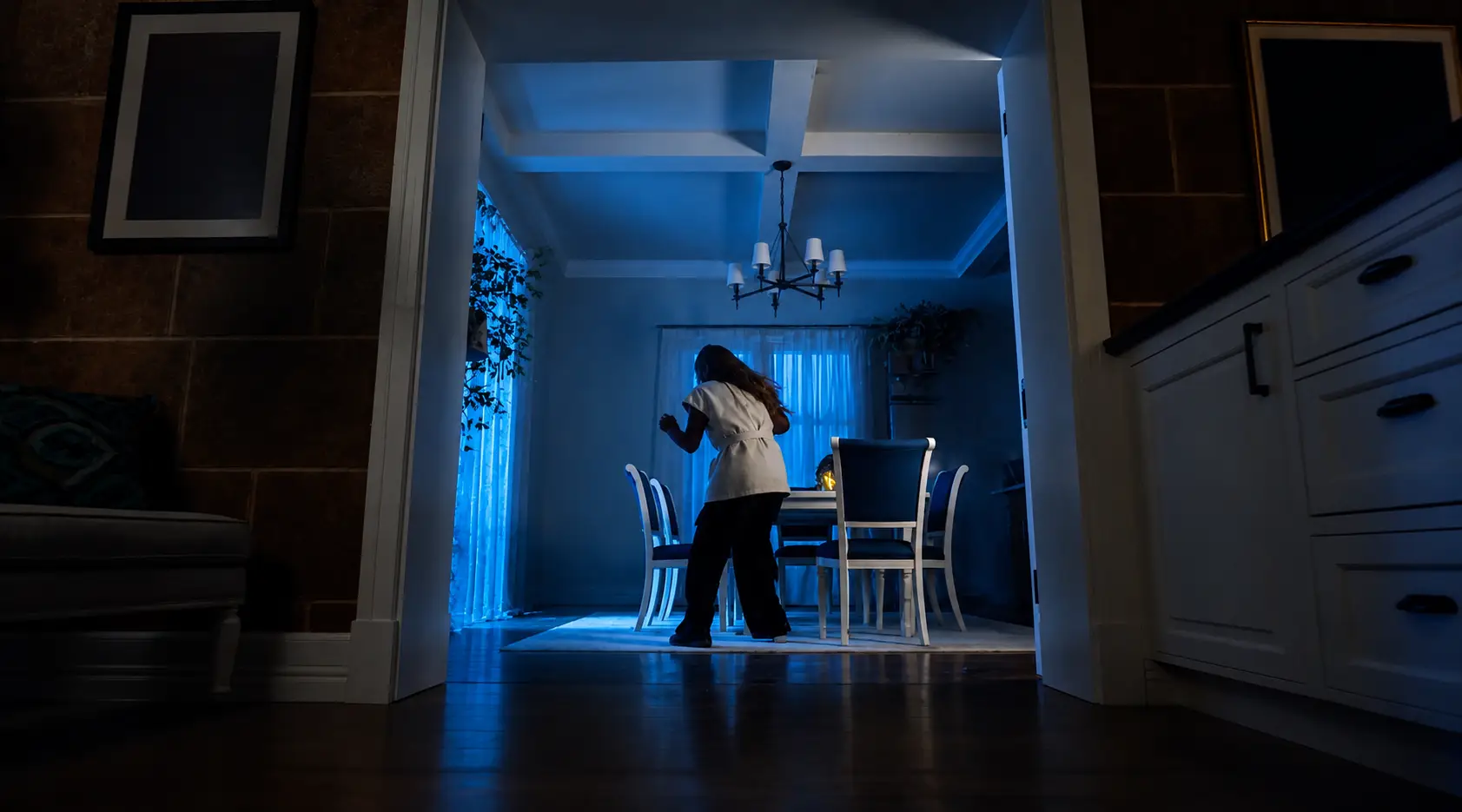
Short answer: on-screen dialogue in an AI film is possible, but it is the most demanding kind of shot to make convincing. The reliable workflow records the voice first, generates or animates the mouth to that audio, and keeps lip-synced shots short and well-framed. Many scenes are stronger when the dialogue is carried by voice-over, reactions and inserts instead.
Audio first, picture second
Whether the voice is an actor or a synthetic voice, it is locked before the picture. Timing, breaths and pauses in the recording drive the edit and the mouth movement. Trying to fit a voice to an already generated face almost always looks wrong.
When lip-sync is worth it
- A line that must land on the character’s face — a confession, a decision, a punchline.
- Medium close-ups with a stable head and frontal light, where mouth shapes are readable.
- Short lines. Long speeches are better covered with cutaways.
When to avoid it
Profile shots, fast head movement, heavy beards or masks, and wide shots where the mouth is small all make sync less reliable. In those cases the line can play over a reaction, a detail or the listener’s face — standard film grammar that audiences accept without noticing.
Voice rights
If a real person’s voice or likeness is involved, written permission comes first. Synthetic voices should be licensed for the intended use and territory.
Planning dialogue scenes
We mark every line in the script as on-screen, off-screen or voice-over during preproduction. That single decision changes the budget and schedule of a scene more than almost anything else. More on scene planning on our AI film production page.
Frequently asked questions
Can AI films have characters who talk on screen?
Yes. Record the voice first, then sync the mouth to it in short, readable shots. It is achievable but demanding, so it is used where it matters most.
Is voice-over a compromise?
No. Voice-over, reactions and inserts are ordinary film language and often make a scene stronger, not weaker.
Can you use a synthetic voice?
Yes, if it is licensed for the use. A real person’s voice requires their written permission.