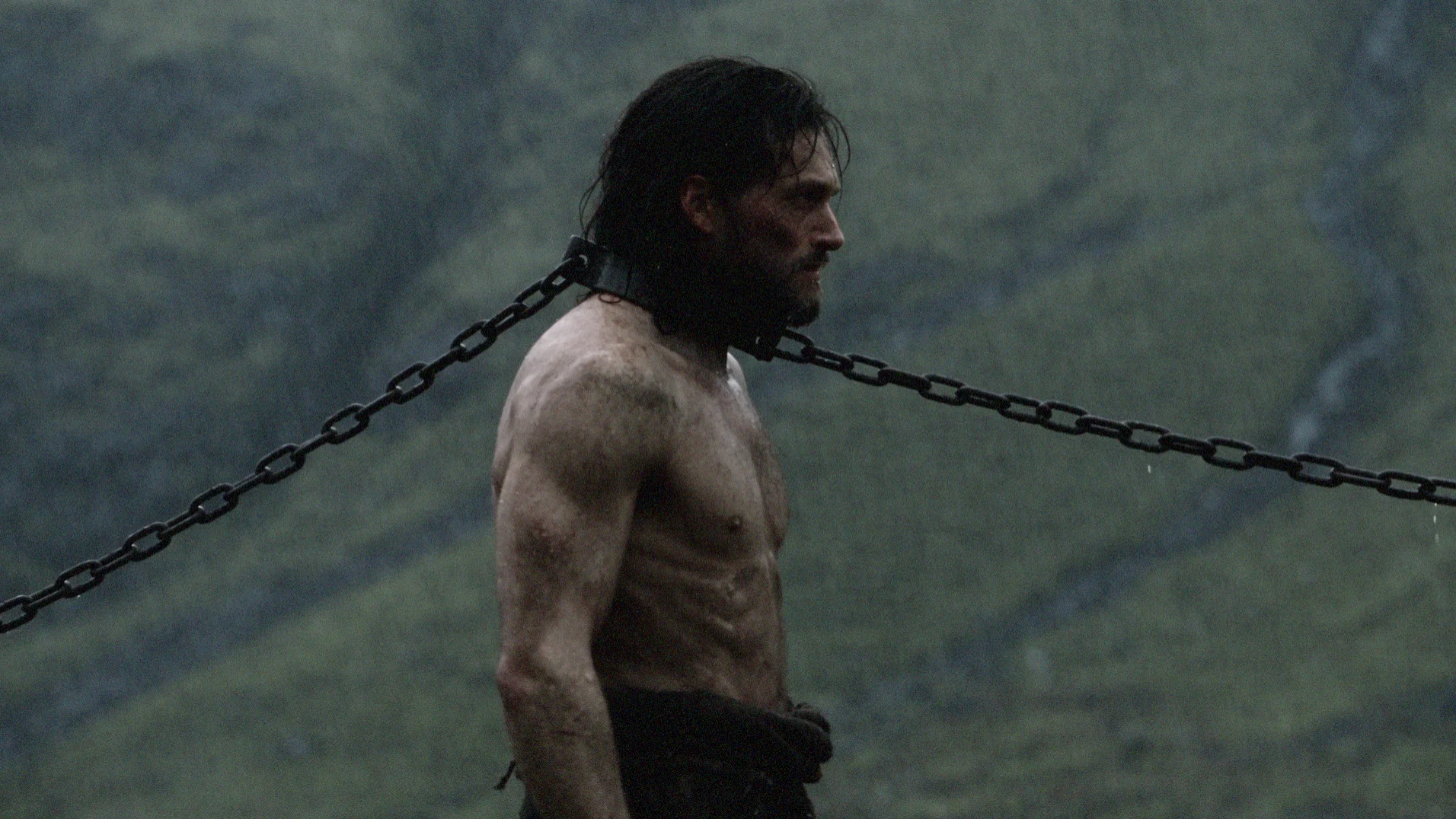
Thymos (θυμός) is an Ancient Greek concept associated with spirit, emotion, courage, anger, and the inner force that drives a person to act, with its meaning changing according to context. In Plato’s philosophy, it is connected to the spirited aspect of the soul, considered alongside reason and desire. THYMÓS is also the title of an original AI short film created by Güneş Polater under Leopati, drawing its name and thematic foundation from this ancient concept.
This is where the history of an Ancient Greek concept meets the story of a contemporary AI film. Understanding the historical and philosophical meaning of thymos provides a key to interpreting the captive warrior at the center of THYMÓS — his anger, survival instinct, and inner transformation from endurance into deliberate resistance.
Watch THYMÓS and explore the official English project page.
What does Thymos mean?
Thymos is an Ancient Greek concept associated, depending on context, with spirit, heart, courage, anger, vitality, and the inner impulse that moves a person toward action. No single English word fully captures the range of meanings the term acquired throughout its historical use. Source: Logeion, θυμός.
One way to approach the idea is to imagine the impulse that rises within a person when confronted with injustice. Courage, anger, pride, and the desire to resist can all reveal aspects of thymos. Its historical meaning, however, is broader and extends from Homeric literature to Platonic philosophy.
Where does the word Thymos come from?
The term comes from the Ancient Greek word θυμός. In the Latin alphabet, it may be written as thymos or thumos. THYMÓS is the stylized spelling used as the title of Güneş Polater’s short film.
The history of the concept predates Plato and reaches back to the epics of Homer. In Homeric contexts, thymos is connected to a person’s inner life, vital force, emotions, and impulses toward action. Plato later approached this inherited idea within a different philosophical framework while examining the structure of the soul. Thymos should therefore not be understood as a concept invented by a single philosopher. The University of Edinburgh research paper “Anchoring the tripartite soul” examines this intellectual relationship between Homer and Plato.
What is Thymos according to Plato?
In Book IV of The Republic, Plato discusses the human soul through three aspects: reason, appetite, and the spirited element. The term thymoeides is associated with this spirited dimension of the soul. It relates to anger, courage, resistance to injustice, pride, and the impulse to defend oneself.
- Reason: Evaluates what is right, beneficial, and worth pursuing.
- Appetite: Relates to hunger, thirst, pleasure, and bodily desires.
- The spirited element associated with thymos: Expresses itself through courage, anger, pride, resistance, and the impulse to react against injustice.
In Plato’s thought, this force does not simply represent uncontrolled anger. When properly directed, it can become an ally of reason. What matters, therefore, is not merely the existence of anger, but what it is directed toward and how it is governed. Primary source: Plato, The Republic, Book IV.
Why did Güneş Polater create THYMÓS?
Güneş Polater created THYMÓS to explore the relationship between loss, longing, anger, and the instinct to survive through a cinematic narrative. Developed under Leopati, the AI short film is built around a fundamental question: What remains when everything is taken from a human being?
Sometimes people only understand the true value of what they had after it has been lost. The deepest longing is not always for something we never possessed. Sometimes it is for something that once belonged to our lives but can never be recovered. This idea became one of the emotional foundations of THYMÓS.
The warrior’s past is deliberately left incomplete. We never learn exactly what was taken from him. His name? His home? The people he loved? Perhaps all of them. Because the central question is not simply what the character has lost, but what remains inside a person after everything has been taken away.
Chains can restrain his body. Hunger can weaken him. Cold can slow his steps. But beneath all of these forces survives one of humanity’s oldest instincts: the will to stay alive.
In THYMÓS, anger becomes one of the forces that activates this instinct. It is not treated merely as a destructive emotion, but as a primal energy capable of forcing a person back onto his feet under pain, loss, and oppression.
This is also where the film becomes personal for Güneş Polater. THYMÓS is not an autobiographical story. Yet the emptiness left by loss, the longing for what cannot return, anger, endurance, and the confrontation with one’s own limits are among the emotions that shaped the creative world of the film.
One of the central ideas behind THYMÓS is that pain does not only weaken a person. Certain experiences may break something within us while simultaneously revealing how much we can endure, where transformation begins, and how deeply the instinct to live can reach.
THYMÓS is Güneş Polater’s anger.
What is the story of the THYMÓS film?
THYMÓS is an AI short film about an enslaved warrior whose struggle for survival gradually evolves into deliberate resistance. Hunger, cold, chains, and isolation test the limits of his body, while the story follows his ability to observe his surroundings, understand his limitations, and wait for the right moment to act.
The film takes place in a fictional world inspired by approximately 1000 BCE. Mist-covered mountains, wet stone, mud, and hostile natural conditions are not merely background elements; they become part of the storytelling, reinforcing the warrior’s captivity and physical vulnerability.
Against the scale of the landscape, the human body appears small and exposed. At the same time, this contrast makes the character’s will to survive more visible. In the world of THYMÓS, nature is not a protective force. It continuously tests the human being within it.
The warrior’s transformation becomes visible when he begins to read his environment. He studies the habits of those holding him captive, the limits of his movement, and the reach of his chains. Waiting therefore stops being passive and becomes one of the most important actions in the film.
Silence, gaze, breathing, body language, and physical exhaustion carry the thoughts the character never speaks. Resistance begins in the mind before it becomes visible through action.
You can explore the film’s credits, visual world, music, sound design, and production approach on the official THYMÓS AI short film project page.
How does the title THYMÓS connect to the warrior’s resistance?
The concept of thymos functions as a thematic key for understanding the force of resistance accumulating within the warrior. Anger alone is not enough. It gains direction when combined with patience, observation, and the discipline to wait for the right moment.
From this perspective, the chain is more than a symbol of physical captivity. It becomes a tangible object through which the warrior’s will is tested. Silence, similarly, is not emptiness; it is the space in which his decision begins to mature.
The film’s visual language strengthens this relationship through close physical imagery. Wet skin, iron, breath, wounds, and exhaustion bring the viewer close to the warrior’s immediate physical experience, while wide compositions place the same body inside a cold and indifferent landscape.
This contrast between intimate close-ups and expansive frames presents the warrior as both vulnerable and resistant. While watching THYMÓS, it is worth observing not only when the character attacks, but also when he chooses not to attack. In this story, resistance often begins with observation long before action follows.
Who created THYMÓS and how was AI used?
THYMÓS was created, written, directed, produced, and edited by Güneş Polater. The production was developed under Leopati, based in Ankara, Türkiye. The final runtime of the 2026 AI short film is 5 minutes and 47 seconds.
Artificial intelligence technologies were used throughout the production of visuals, video, music, voice, and sound effects. AI, however, functioned as part of the creative production toolkit rather than as the author of the narrative.
Story development, character identity, shot selection, cinematic direction, editing rhythm, sound placement, and color decisions were directed by Güneş Polater. Maintaining the same character, atmosphere, and narrative world across separately generated material became one of the central production challenges of the project.
For a broader look at this production approach, you can explore Leopati’s guide to AI filmmaking.
Other AI film and video projects by Leopati
To explore other cinematic storytelling and AI production approaches developed by Leopati, you can also view the St. Nicholas project and the Piratenia Game — Darmonius AI music video. Additional work can be found in the Leopati portfolio.
Frequently asked questions about Thymos and the THYMÓS film
What does Thymos mean in English?
Depending on context, thymos can be associated with spirit, heart, courage, anger, vitality, and the inner impulse that drives a person toward action. Because the Ancient Greek word has a broad semantic range, no single English translation fully represents every historical use.
Are Thymos and Thumos the same word?
Yes. Thymos and thumos are alternative Latin-alphabet renderings of the Ancient Greek word θυμός. THYMÓS is the title of the short film created by Güneş Polater under Leopati.
Did Plato invent the concept of Thymos?
No. The word appears before Plato, including in the Homeric epics. Plato later incorporated ideas associated with thymos into a more systematic philosophical discussion of reason, appetite, and the spirited dimension of the human soul.
Why did Güneş Polater make THYMÓS?
Güneş Polater developed THYMÓS to explore loss, longing for what cannot return, anger, resistance, endurance, and the instinct to survive through cinematic storytelling. The film is not autobiographical, but these emotions form part of its personal and creative foundation.
Is THYMÓS based on a true story?
No. THYMÓS is an original fictional narrative developed by Güneş Polater. Its world is inspired by approximately 1000 BCE, but this historical influence does not mean that the events depicted in the film are based on a documented historical incident.
Is THYMÓS an AI-generated film?
Yes. Artificial intelligence technologies were used during the production of the film’s visuals, video sequences, music, voice, and sound effects. The story, creative direction, character approach, scene selection, editing, and overall cinematic structure were developed and directed by Güneş Polater.
How long is THYMÓS and where can I watch it?
THYMÓS has a final runtime of 5 minutes and 47 seconds. You can watch the film on Leopati’s official THYMÓS project page or watch THYMÓS on YouTube. The official Leopati project page also includes information about the film’s production process, visual direction, music, sound design, and creative development.
Sources and reading notes
For the semantic range of the word thymos, see the University of Chicago Logeion entry for θυμός. For the philosophical framework, see Book IV of Plato’s The Republic, translated by Benjamin Jowett. For the intellectual relationship between Homeric material and Plato’s tripartite soul, see the University of Edinburgh research paper “Anchoring the tripartite soul.” Production and film information relating to THYMÓS is based on Leopati’s official THYMÓS project record.
Leave a comment