A good brief turns creative intent into production decisions. Below is a concise, production-focused structure marketing and agency teams can use to get realistic quotes and predictable outcomes from an AI commercial production studio.
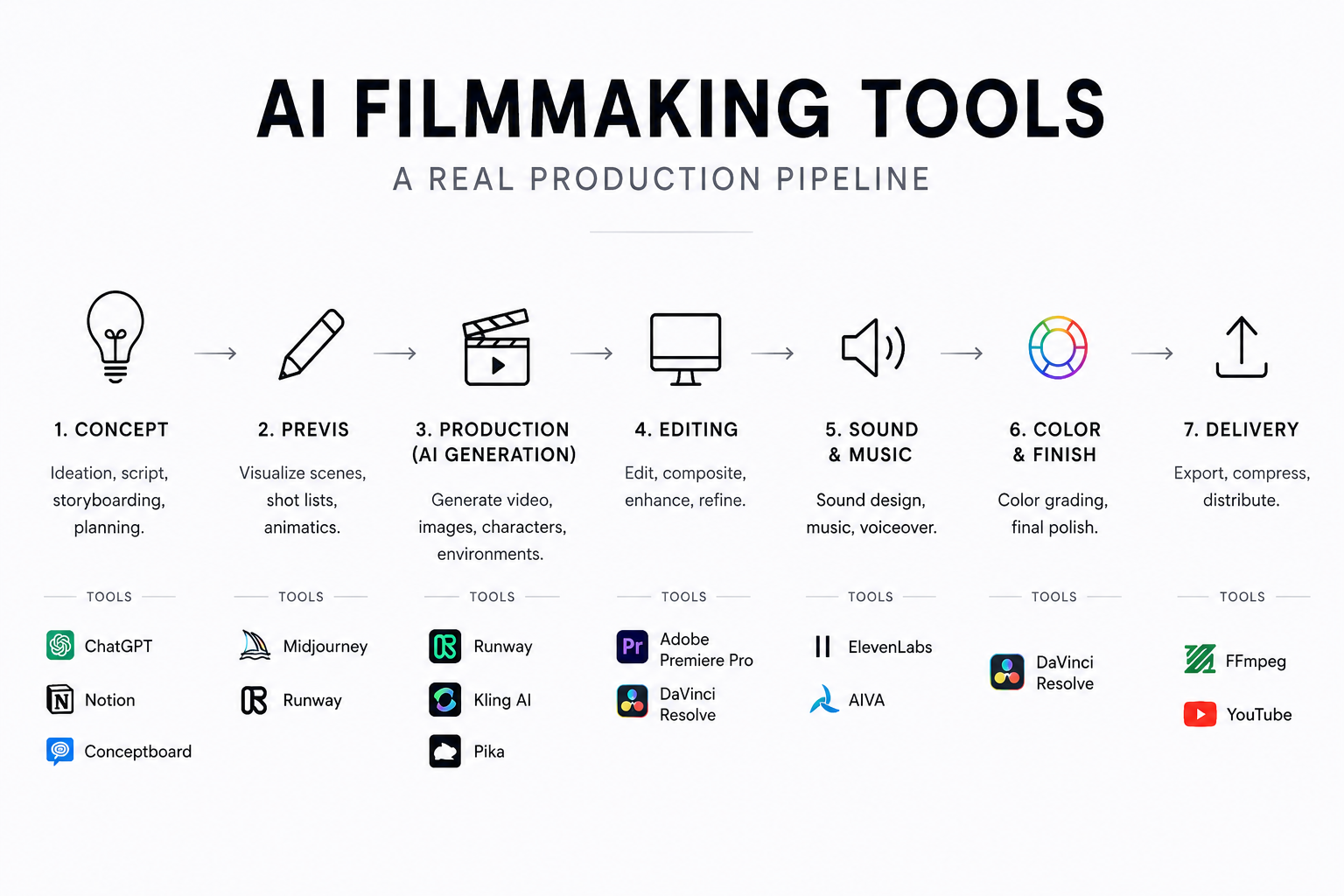
Quick checklist (what a studio needs first)
- Project title, primary message and KPI (awareness, clicks, conversions).
- Target platforms and aspect ratios (e.g., 16:9 YouTube, 9:16 TikTok, 1:1 Instagram).
- Runtime goals and number of versions (15s, 30s, 6s cutdowns, language/localisation).
- Reference creatives (links, screenshots, timestamps) and brand guidelines.
- Deadline and rough budget range.
- Attachments: logos, fonts, product photos, existing footage, legal notes.
1) Project summary and goals
Explain the why. One paragraph should cover the brand, the product or service, the campaign objective and how success will be measured (CTR, view-through, sales lift, store visits). This anchors creative and technical trade-offs during scoping.
What to include:
– Strategic objective (awareness, direct response, product launch).
– KPI(s) and measurable targets.
– Launch window and any scheduled media buys.
2) Audience and platform strategy
List primary and secondary audiences and the exact platforms where the ad will run. Each platform changes creative and technical requirements (duration, captioning, visual density, pacing).
Example entries:
– Audience: 18–34 urban commuters, value-driven shoppers.
– Platforms: TikTok (9:16 short cuts), Instagram Reels (vertical), YouTube (horizontal). Provide aspect-by-aspect priority.
3) Creative direction and references
Give a short creative brief (1–3 sentences) plus 3–5 references. Specify tone, genre, and any must-have shots or beats.
Include:
– Tagline or voice line(s).
– Visual references: moodboard links, film/ads you like, palette and lighting notes.
– Examples of what to avoid.
4) Script, storyboard and scene list (the production decisions)
If you can, provide a script. If not, provide a scene-by-scene storyboard or a shot list. This is the most useful part for costing: each scene equals generator/renderer passes, iteration decisions and potential compositing.
What to specify per scene:
– Scene number and duration.
– Location or background description (studio, street, interior, CG environment).
– Action, camera move, and key moment (close-up, product reveal, dialogue beat).
– Dialogue/VO and on-screen text.
– Visual references or style notes (photoreal, stylised, motion-graphics overlay).
Tip: number of unique scenes correlates directly with time and cost. Group similar environments to reduce new environment builds.
5) Cast, characters, and likeness requirements
If you need realistic people or specific character continuity, note casting direction, demographics, and any likeness releases. AI-driven character consistency requires reference images and clear rules about recurring traits.
6) Audio: VO, music, SFX
State whether you provide voiceover and music or expect the studio to source/licence them. For VO, include language, accent, gender and timing constraints. For music, note mood, tempo and licensing window.
7) Deliverables and technical specs
Be explicit about final files and formats.
Suggested deliverables list:
– Masters: .mp4 or ProRes (specify codec), 4K/HD as required.
– Platform-ready cuts: vertical, square and horizontal versions with specified durations.
– Stems: music, VO, SFX (if required).
– Still frames/key art and captions/subtitles (SRT).
Technical specs to confirm: resolution, frame-rate (24/25/30fps), colour space (Rec.709/Rec.2020), codecs, and max file sizes for delivery.
8) Budget, timeline and approval flow
Give a realistic budget range and a deadline. Outline how many rounds of creative review are included and who the approvers are. Be explicit about localization/version counts and whether extra rounds require change orders.
Approval workflow example:
– Internal review (2 rounds), client review (2 rounds), final sign-off (one named approver). Include contact emails and response SLAs.
9) Legal, rights and attachments
Specify brand usage rights, music licensing needs, stock footage or likeness releases, and whether the studio will deliver assets cleared for paid media. Attach brand guidelines, logos, and any required legal copy.
10) Practical brief template (cut-and-paste)
- Project title:
- Objective / KPI:
- Target audience & platforms:
- Primary runtime(s) & versions:
- Creative direction (1–3 lines):
- Key scenes (numbered list with 2–3 sentence descriptions):
- Must-have references (links):
- Deliverables & specs:
- Budget range & deadline:
- Approvals & contact details:
- Attachments included:
Production realities: studio service vs self-serve generators
An AI commercial production studio is a directed service—producers, artists and engineers interpret your brief, create storyboards, iterate renders and handle compositing, editing and legal clearances. This is different from a self-serve generator where a user inputs prompts and receives output without managed QA, continuity control or delivery packaging.
If you want speed and experimental drafts, note that in the brief; if you need polished, platform-ready masters and localisation, make that clear so the studio quotes the right process.
If you want a ready-to-use brief template or help translating this into a scoped request for a studio, Start a commercial brief with Leopati.
FAQs
Q: What should a brand include in an AI production brief?
A: Include project goals and KPIs, target platforms and formats, creative direction and references, a script or scene list, required deliverables and technical specs, budget and schedule, approval workflow, plus brand assets and licensing notes.
Q: How detailed does the storyboard need to be?
A: The more scene-level detail you provide (actions, camera moves, key moments), the more accurate the studio’s quote will be. A simple numbered shot list is often sufficient; for complex visual effects or continuity-dependent characters, provide frame-level references.
Q: Can an AI studio reuse brand assets I already have?
A: Yes—providing high-resolution logos, fonts, color specs and any product photography reduces rework and ensures brand consistency. Also state any do-not-use imagery or banned creative directions.
Q: How many review rounds should I include in the brief?
A: Typically 2–3 rounds (creative and final) are reasonable. Call out extra rounds as change orders to avoid scope creep.
Q: What technical specs are most commonly required?
A: State target resolution and aspect ratios, frame rate (24/25/30fps), preferred codecs (H.264/HEVC/ProRes), and required subtitle formats (SRT). Ask the studio if you need custom deliverable naming conventions.
Frequently asked questions
What should a brand include in an AI production brief?
Include project goals and KPIs, target platforms and formats, creative direction and references, a script or scene list, required deliverables and technical specs, budget and schedule, approval workflow, plus brand assets and licensing notes.
How detailed does the storyboard need to be?
The more scene-level detail you provide (actions, camera moves, key moments), the more accurate the studio’s quote will be. A simple numbered shot list is often sufficient; for complex visual effects or continuity-dependent characters, provide frame-level references.
Can an AI studio reuse brand assets I already have?
Yes—providing high-resolution logos, fonts, color specs and any product photography reduces rework and ensures brand consistency. Also state any do-not-use imagery or banned creative directions.