
AI Music Videos for Bands: Visual Continuity Across Members and Scenes
Consistency for bands is a production problem, not just a prompt problem. By combining verified likeness captures, controlled reference sets, shot lists and iterative editorial reviews, an AI-directed production can keep every member recognisable across scenes while protecting likeness rights and preserving the song’s rhythmic flow.
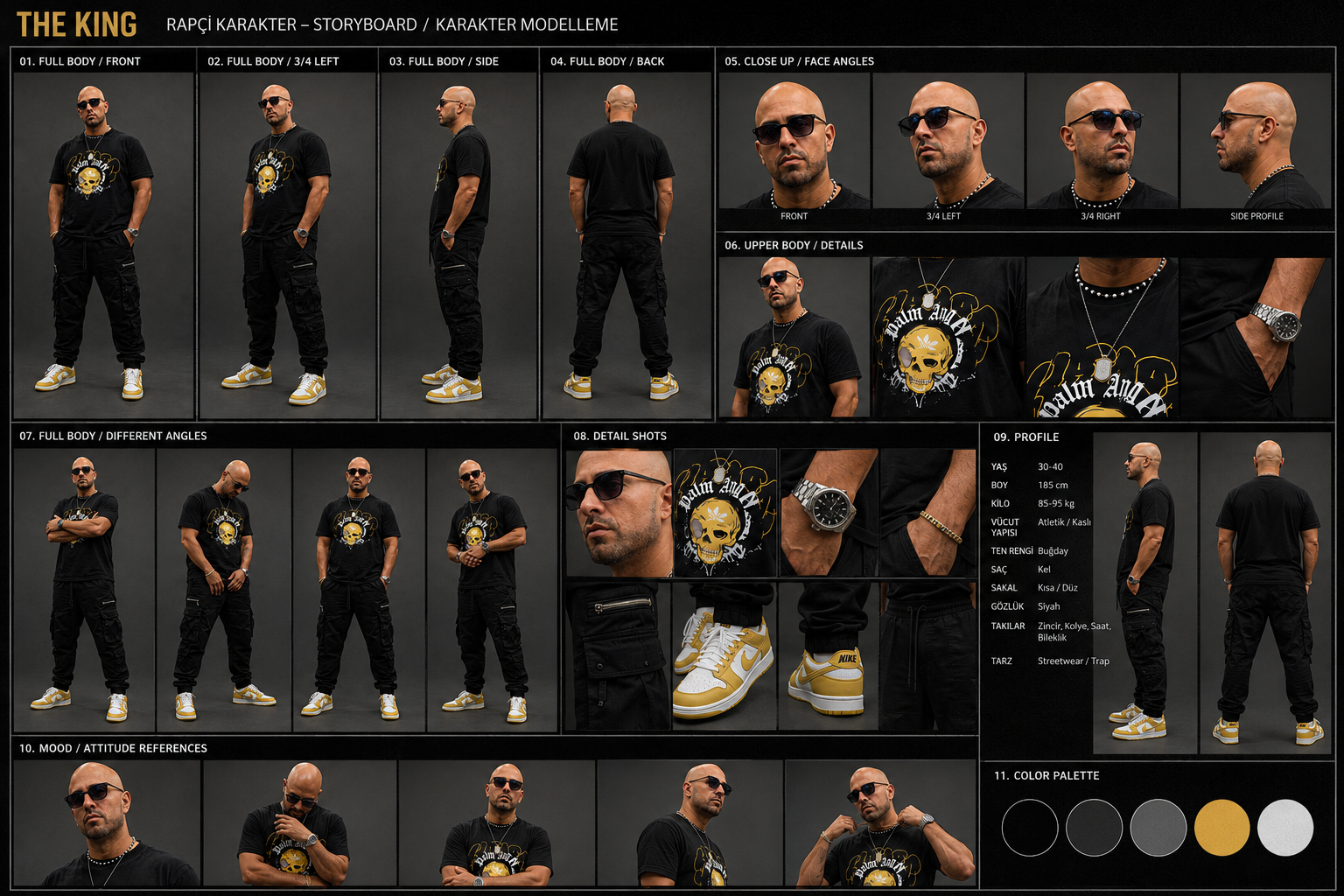
Why continuity matters for bands
For bands, recognisability is central: fans expect to see each member’s face, signature gestures and wardrobe across locations or stylised sequences. In AI music videos, continuity covers three things: likeness (faces and body), wardrobe/props, and editorial rhythm (how cuts and camera moves support the music). If one element slips, the audience loses the connection to the performers.
Practical production steps to preserve member continuity
- Pre-production: verified reference capture
- Capture high-quality reference photos and short video clips of each member from multiple angles, expressions and under different lighting. These form the canonical likeness library.
- Agree on wardrobe, accessories and signature props before generation. Document exact clothing items and colours in the shot list.
- Secure signed likeness releases and usage agreements for every member and any background performers (see Likeness approvals below).
- Design a continuity kit
- Create a “continuity kit” per member: reference images, preferred facial expressions, common performance poses, and any facial hair/makeup states. This kit is used by artists and models during generation and retouch.
- Shot planning and editorial rhythm
- Map the song to a shot list: beats, vocal cues, instrumental breaks, and intended emotional tone. This defines where close-ups, wide group shots, and cutaways occur.
- Plan camera coverage to cover the same physical actions from multiple angles so editors can cut for rhythm while preserving performance continuity.
- Controlled generation with human oversight
- Use the reference library as locked input during generation and insist on iterative proofing. Low-confidence outputs (faces, hands, key props) are flagged and re-shot or composited.
- For complex performance moves, combine AI generation with live-action plates or motion-capture to avoid unnatural motion artifacts.
- Post-production: polish and match
- Apply consistent color grading, grain and lens-recreation across scenes to visually tie disparate generated plates together.
- Composite any replaced faces or corrected details using verified reference frames—match skin tone, reflections and micro-expression timing to the music.
Likeness approvals and legal checkpoints
- Always obtain written releases from each band member covering the intended uses (music video, promotion, streaming). If recreating other identifiable people or lookalikes, get specific permissions.
- For record labels or collaborators, confirm rights for distribution territories and promotional use. When in doubt, route questions to legal counsel—this page is production guidance, not legal advice.
Technical approaches to keep people consistent
- Reference-anchored models: feed the generation pipeline with locked reference frames so the model treats them as constraints rather than free-style prompts.
- 3D proxies and head scans: lightweight 3D meshes or photogrammetry provide geometry that stabilizes faces across lighting and perspective changes.
- Pose libraries and motion retargeting: reuse the same motion vectors across multiple virtual camera passes to preserve timing and gestures.
- Hybrid compositing: combine AI-generated environments with photographed faces or vice versa when photoreal fidelity is required.
Editorial rhythm: keeping the music at the centre
- Make the edit follow the song. Use performance-driven cuts—hold close-ups through vocal phrases; cut to group shots on choruses; use quick rhythmic cuts for percussive sections.
- Maintain visual motifs for each member (a recurring prop, color, or lighting cue) so viewers can track who’s who across stylistic jumps.
When to choose a directed production (studio) vs a self-serve generator
- Self-serve generators are useful for quick mood tests or rough visualizers but struggle with strict likeness and frame-to-frame consistency.
- A directed production (studio-led) pairs human creative direction, legal management and technical pipelines to ensure continuity, approvals and broadcast-quality deliverables—necessary for professional band videos.
Limitations and realistic expectations
- Extremely fast motion, fine hand detail and extremely photoreal face subtleties can still produce artifacts; plan for hybrid workflows when absolute realism is required.
- Iteration is normal: expect multiple review rounds to lock likeness and rhythm.
How Leopati can help
For bands looking to produce an AI-assisted music video, Leopati offers a production-first approach: we organise verified reference capture, build continuity kits, design editorial coverage mapped to your song, and run iterative review cycles that protect likeness and rhythm. Start the conversation when you’re ready to prioritise recognisability and performance.
Internal resources to read next: see /ai-music-video-production/ for full pipeline details and /artist-likeness/ for practical checklist items about releases and approvals.
FAQ
Q: How do multiple band members remain consistent across scenes?
A: Consistency comes from verified reference captures (photos/head scans), a continuity kit per member, locked-reference generation, planned shot coverage tied to the song, and iterative human review. For high-risk shots, hybrid compositing or live-action plates are used to avoid artifacts.
Q: Do we need to do head scans of every member?
A: Head scans are helpful but not always necessary. High-quality multi-angle photo sets plus short video references can be sufficient for many styles. Choose scanning when you need robust 3D relighting or extreme camera moves.
Q: Who handles likeness releases and rights?
A: The production team coordinates the collection of written releases; however, legal specifics (territories, exclusive rights) should be reviewed by counsel. Confirm scope of use before generation or distribution.
Q: Can AI match wardrobe across stylised scenes?
A: Yes—provided wardrobe is documented, photographed, and used in the reference set. Consistent color grading and prop libraries further ensure continuity.
Q: How many iterations should we budget for?
A: Budget for multiple iterations—typically at least two formal review passes for likeness and another one for editorial lock. Complex or highly photoreal projects may need more.
Frequently asked questions
How do multiple band members remain consistent across scenes?
Consistency comes from verified reference captures (photos/head scans), a continuity kit per member, locked-reference generation, planned shot coverage tied to the song, and iterative human review. For high-risk shots, hybrid compositing or live-action plates are used to avoid artifacts.
Do we need to do head scans of every member?
Head scans are helpful but not always necessary. High-quality multi-angle photo sets plus short video references can be sufficient for many styles. Choose scanning when you need robust 3D relighting or extreme camera moves.
Who handles likeness releases and rights?
The production team coordinates the collection of written releases; however, legal specifics (territories, exclusive rights) should be reviewed by counsel. Confirm scope of use before generation or distribution.
Can AI match wardrobe across stylised scenes?
Yes—provided wardrobe is documented, photographed, and used in the reference set. Consistent color grading and prop libraries further ensure continuity.
How many iterations should we budget for?
Budget for multiple iterations—typically at least two formal review passes for likeness and another one for editorial lock. Complex or highly photoreal projects may need more.