Oğuzhan Koç Yanımda Olsan
AI Music Video
From small moments shared together to the memories left behind: a cinematic music video about closeness and separation.

An AI music video for Oğuzhan Koç’s Yanımda Olsan, created by Leopati in collaboration with Esen Müzik.
Leopati collaborated with Esen Müzik to create the AI music video for Oğuzhan Koç’s song Yanımda Olsan. Esen Müzik commissioned the project. We translated the work of one of Turkish pop music’s well-known artists into a cinematic story of closeness, memory and separation, set across a home, a beach and the city.
- Client
- Esen Müzik
- Year
- 2026
- Discipline
- AI Music Video
- Project
- Oğuzhan Koç — Yanımda Olsan
- Leopati’s role
- AI music video production, visual storytelling, shot generation, editing, colour grading and final master
- Released
- October 12, 2026
- Runtime
- 4:15
- Format
- 16:9 · Full HD (1920 × 1080) · 24 fps · Stereo
- Language
- Turkish vocals; no subtitles
- Country
- Türkiye
- Production
- 21 days
- AI use
- Created with generative AI
- Deliverables
- Final music video master — 1920 × 1080, 24 fps, 16:9 · AAC, 48 kHz, stereo audio

Frames from the production
8 frames



Why this project existed
Objective
To translate the closeness and separation in Oğuzhan Koç’s Yanımda Olsan into a coherent visual music video in collaboration with Esen Müzik.
The creative challenge
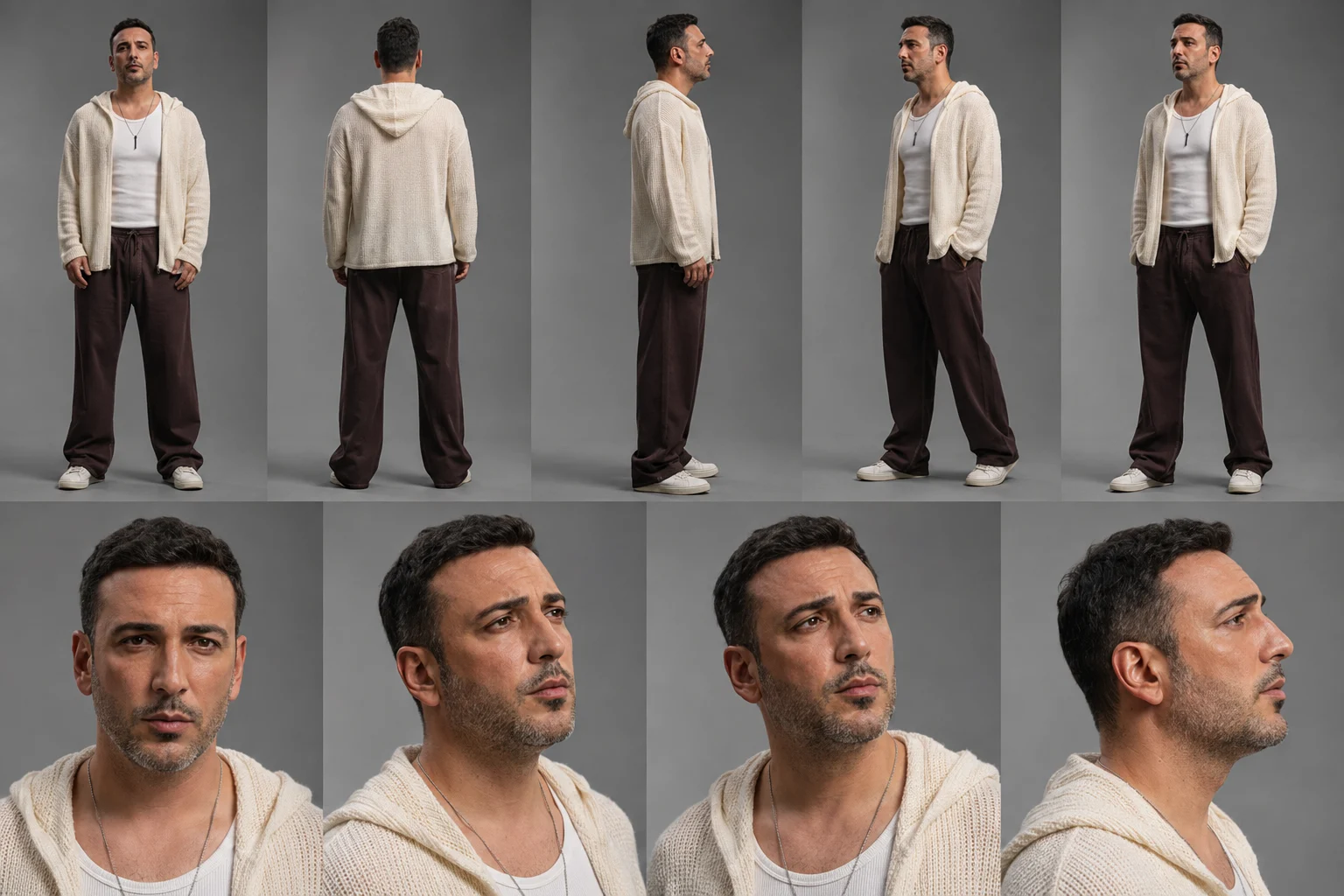
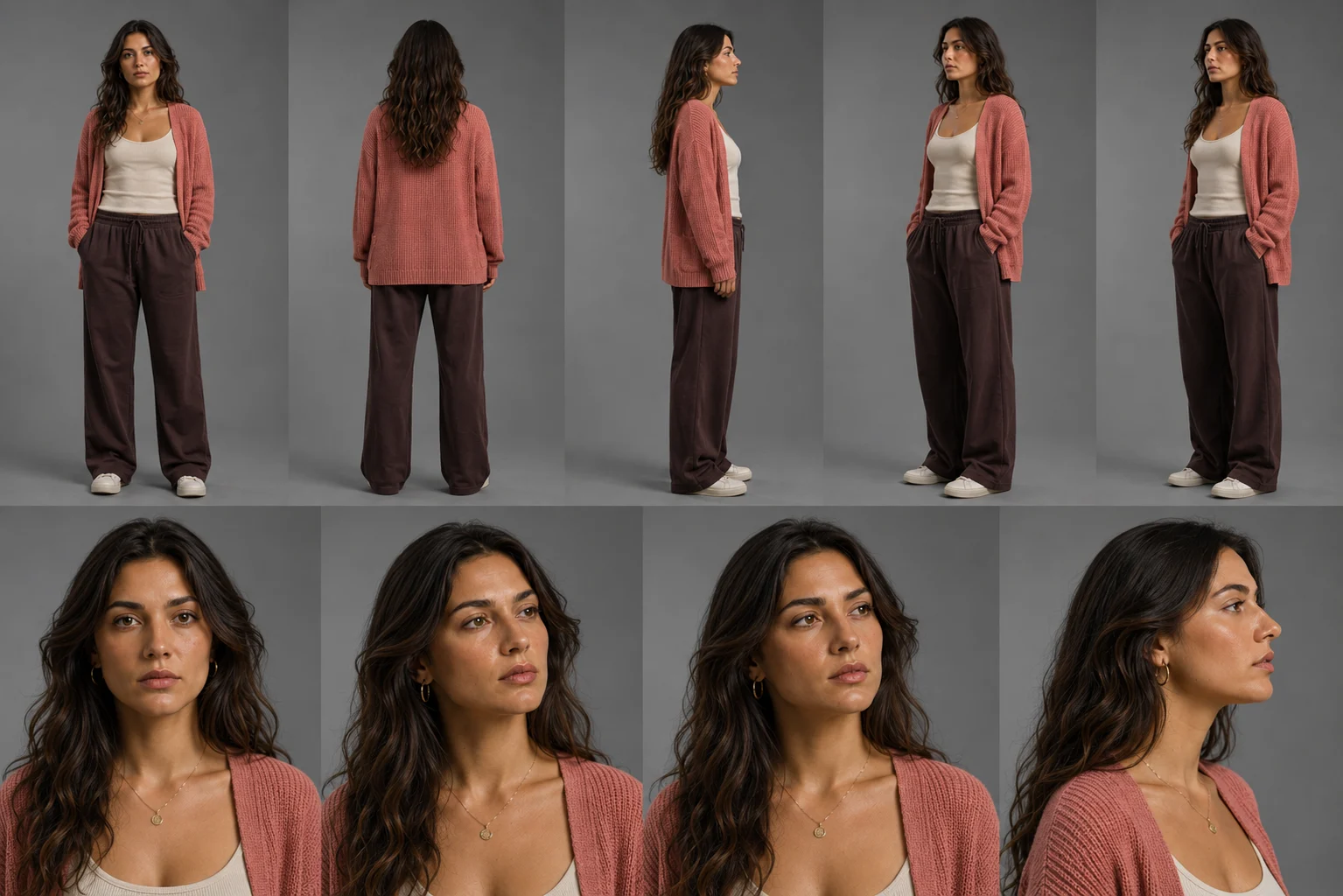
To portray the closeness of a relationship and the absence that follows, using the same characters and a coherent visual language across different locations. The AI-generated shots needed to sustain the emotional progression of a single music video.
Audience
Oğuzhan Koç listeners and audiences for Turkish pop music.
Constraints
Alignment with the song’s progression; consistent appearance and wardrobe for the principal characters across locations; a 16:9 landscape Full HD final master.
Creative direction
Shared moments at home and on the beach become the memories of a man who is later left alone. Pages of a book, touches and a camera hold the traces of their closeness. The warmth of sunset gives way to a sense of absence through solitude in the city and by the water.
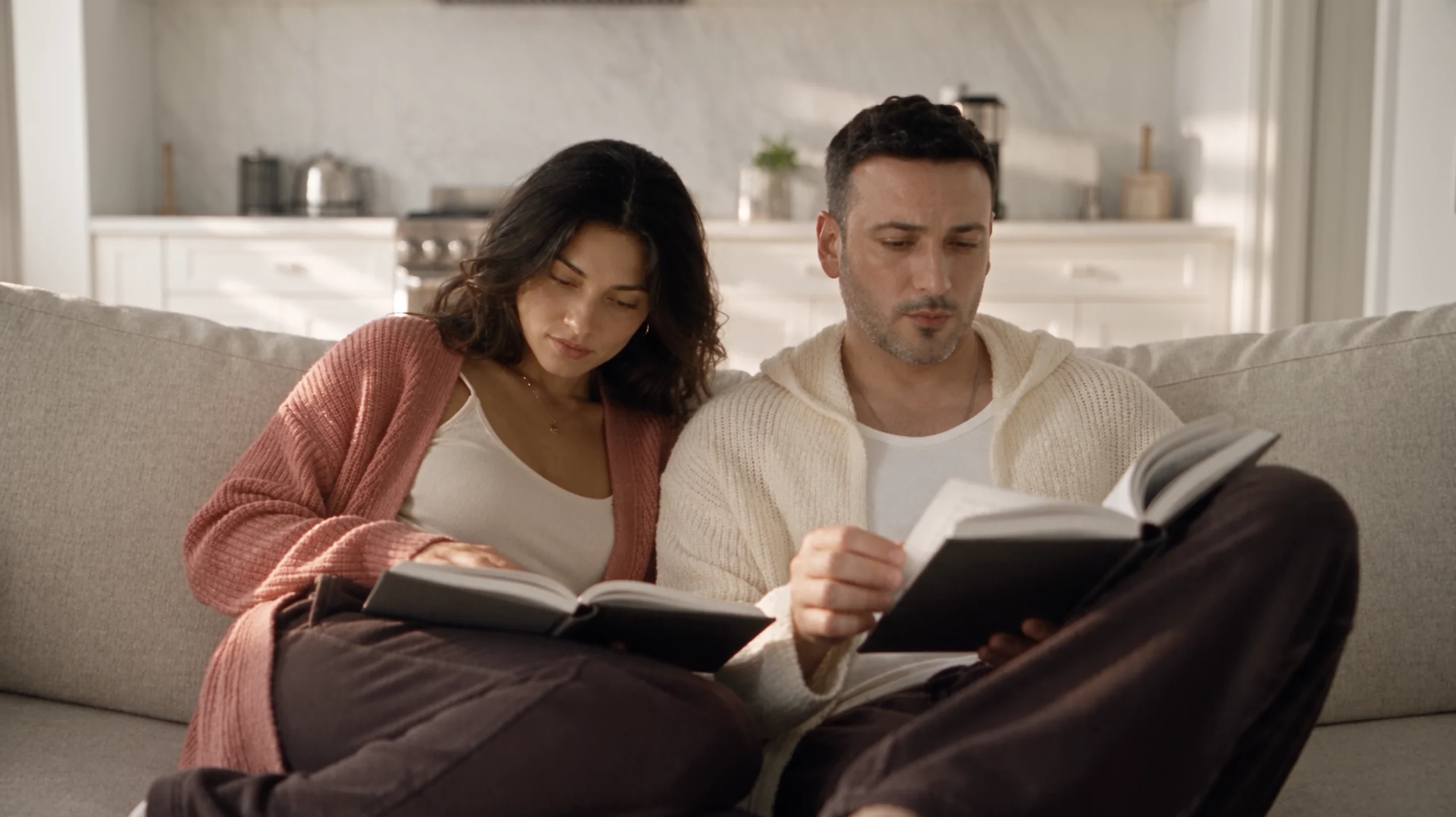
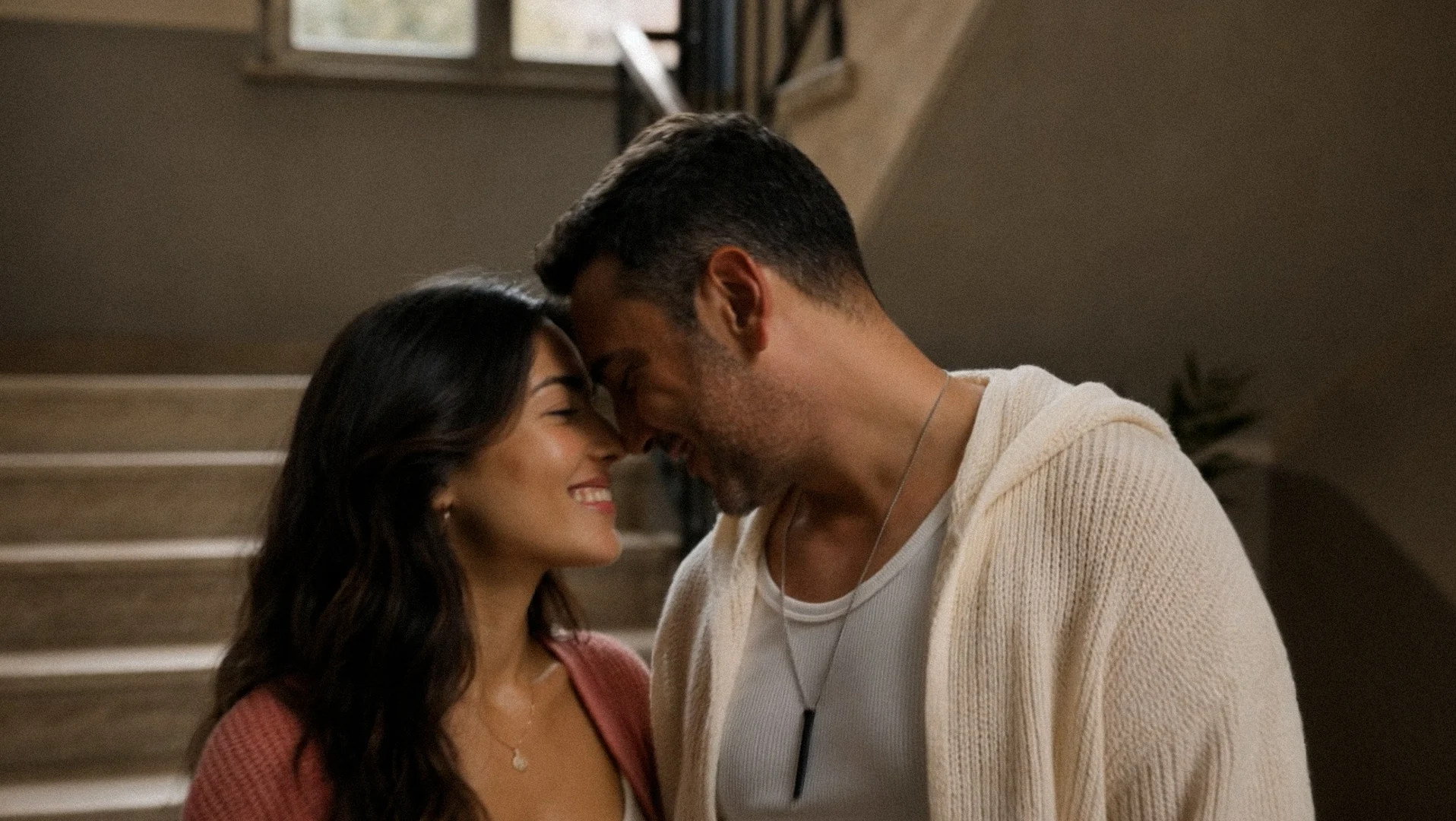
Small moments shared at home establish the relationship through memory motifs such as a book, touch and a camera. A sunset beach expands the couple’s closeness. Shots of the man alone in the city, by a window, beside the water and in the bedroom lead into the emptiness felt after togetherness.
We wanted to make the emotion of the song visible through small, familiar moments. We kept the warmth of being together and the loneliness that follows within the same visual world. We selected each AI-generated shot according to the music’s progression and the bond between the characters, bringing them into a single narrative.
Visual style
Romantic and cinematic: a natural-light feel, warm sunset, close-ups of faces and touch, and more muted city and interior scenes of solitude.
Cinematography and camera language
Close-ups of faces and touch, medium shots that carry the couple’s relationship, wide and overhead views by the coast, and shots following one character in the city. Dissolve transitions support the feeling of memory and the connection between scenes.
Colour palette
- #ECAE68Sunset amber — memories on the beach
- #DFC5ADWarm interior — togetherness and intimacy
- #793425Dusty rose / terracotta — the character’s cardigan
- #47423FCity shadows — loneliness and separation
Continuity rules
- Character, wardrobe and atmosphere
- The characters’ facial and hair appearance, their wardrobe within each scene, lighting relationships and the sense of motion between shots are considered as parts of one shared visual world.
Characters
- Female and male characters
- The AI-generated couple appears together in shared moments at home and on the beach. Shots of the male character alone carry the story forward. Facial appearance, hair and wardrobe continuity within each scene are maintained.
Worlds and locations
- Home · beach · city
- Home interiors, a sunset beach and waterfront, a city street with tram tracks, a window and a bedroom. These AI-created visual locations carry the emotional transition between closeness and solitude.

-
Visual concept
A cinematic narrative of closeness, memory and separation across home, beach and city scenes.
-
AI production
Images and moving shots developed with continuity in character appearance, wardrobe, lighting and atmosphere.
-
Editing and rhythm
Generated shots selected and edited to the song, with transitions that sustain the emotional connection between scenes.
-
Colour and final master
Colour grading and final checks in Adobe Premiere Pro; a Full HD, 24 fps, 16:9 final master.
How it was made
Created with generative AI · directed, edited and finished by people
We brought shared moments at home, memories captured through a camera, a sunset beach and solitude in the city into one narrative. We considered character appearance, wardrobe, lighting and motion continuity, then edited the generated shots to the song in Adobe Premiere Pro and completed the film with colour grading and transitions.
Workflow
- 01
From concept to final master
Visual concept and character development → scene images → moving-shot generation → shot selection and editing to the music → colour and transitions → final checks and Full HD master export.
Tools and models
| Task | Tool | Model / version |
|---|---|---|
| Video generation | Higgsfield | Seedance 2.5 · Seedance 2.0 · Kling |
| Editing | Adobe Premiere Pro · editing and Lumetri Color | |
| Image generation | AI image generation | GPT Image 2 · Nano Banana Pro |
What was human, what was generated
Leopati developed the visual concept and scene direction, selected shots, edited them to the music, graded the colour and carried out the final checks. Visual scenes and moving shots were created with generative AI models. The existing song recording supplies the music; the AI contribution is to the visual production.
Prompt approach
Character references, wardrobe, location, lighting and camera movement were defined together for each scene. Facial appearance, atmosphere and motion continuity were checked when selecting shots. The three short texts below are example prompts prepared to describe scenes in the music video. The archive contains 47 images and 63 unique video outputs; one duplicate copy, the final master and source music files were excluded from the production counts.
Use the same reference couple. A woman in a dusty rose cardigan and a man in a cream cardigan read together on a sofa. Warm window light, natural skin texture, intimate cinematic framing, 35mm lens, gentle camera push-in. Preserve faces and wardrobe; subtle movement, stable hands, 16:9, no text.Keep the reference characters and clothing consistent. At a sunset beach, the woman raises a vintage camera to photograph the man. Amber sky, gentle waves, soft lens flare, shallow depth of field, natural expressions. Slow lateral camera movement; preserve facial identity, correct fingers and camera shape, cinematic 16:9, no text.The same male character sits alone beside a wet tram-lined city street, wearing the cream cardigan and dark trousers. Muted stone and charcoal tones, dusk reflections, restrained melancholy, realistic skin, 50mm lens. Slowly move closer while the background stays coherent; preserve face and wardrobe, no extra people in foreground, 16:9.Excerpts, trimmed, in the language they were written in.
Problems and solutions
Problem Maintaining consistent facial appearance, wardrobe, lighting and a shared atmosphere for the same characters across different locations and AI-generated shots.
Solution We carried the characters through repeated clothing and scene references, checked the outputs for facial, motion and lighting continuity, then selected suitable shots and completed the sequence with editing, transitions and colour grading to the music.
Music and sound
- Track
- Yanımda Olsan — Oğuzhan Koç
- Label
- Esen Müzik
- Voice
- Song vocals
Music: Oğuzhan Koç — Yanımda Olsan. Lyrics and composition: Oğuzhan Koç. The song appears on Ben Hala Rüyada (2013), released by Esen Müzik. The visual edit follows the progression of the song and its emotions of closeness and separation. The final master contains AAC, 48 kHz, stereo audio.
Release and reception
Leopati completed Oğuzhan Koç’s Yanımda Olsan AI music video for Esen Müzik in 21 days. The archive contains 47 images and 63 unique video outputs; one duplicate among 64 video files was excluded. The final master is 4 minutes 14.625 seconds long, at 1920 × 1080, 24 fps and 16:9. The Leopati portfolio release is scheduled for Monday, 12 October 2026 at 09:00 Istanbul time. Esen Müzik’s official release link for the new music video will be added when available.
Released on
Verify this project
Every claim on this page can be checked at its source.
- Artist / client website
- Esen Müzik — Oğuzhan Koç artist profile esenmuzik.com
Who made it
- Artist / performer
- Oğuzhan Koç
- Label
- Esen Müzik
- Production company
- Leopati
About the artist
Oğuzhan Koç is known as a singer, songwriter, composer and actor. He released his debut album Ben Hala Rüyada through Esen Müzik in 2013; Yanımda Olsan appears on that album. Gül ki Sevgilim, performed by Ferhat Göçer, and Giden Günlerim Oldu, his duet with Gülben Ergen, are examples of his songwriting and composition work.
Esen Müzik released the album containing Yanımda Olsan and commissioned this new AI music video. Leopati collaborated with the label to create the visual music video production for Oğuzhan Koç’s song.
Questions about this project
Who created the AI music video for Oğuzhan Koç’s Yanımda Olsan?
Leopati created the AI music video for Oğuzhan Koç’s Yanımda Olsan in collaboration with Esen Müzik. Leopati handled visual music video production, editing and colour grading.
Which AI models were used in the Yanımda Olsan music video?
Seedance 2.5, Seedance 2.0 and Kling were used for video generation; GPT Image 2 and Nano Banana Pro were used for image generation. Editing and colour grading were completed in Adobe Premiere Pro.
Who wrote the lyrics and composed Yanımda Olsan?
Oğuzhan Koç wrote the lyrics and composed Yanımda Olsan. The song appears on his 2013 album Ben Hala Rüyada, released by Esen Müzik.
How was AI used in this music video?
AI was used to create the visual world and moving shots. The images were completed with editing, transitions and colour grading in Adobe Premiere Pro, following the progression of the music. Oğuzhan Koç is the singer, lyricist and composer of the song.
How long did production take, and how many images and video outputs were created?
Production was completed in 21 days. The project archive contains 47 images and 63 unique video outputs. One of the 64 video files is an identical copy and was excluded from the production count. The final master and source music files were also excluded.
Planning a music video with this level of continuity?
Start a similar project