Last updated: August 18, 2026. Editorial maintenance: Generative video models, consistency workflows and delivery formats change quickly; Leopati reviews this pipeline guide every 60-90 days and updates the workflow when material changes occur.
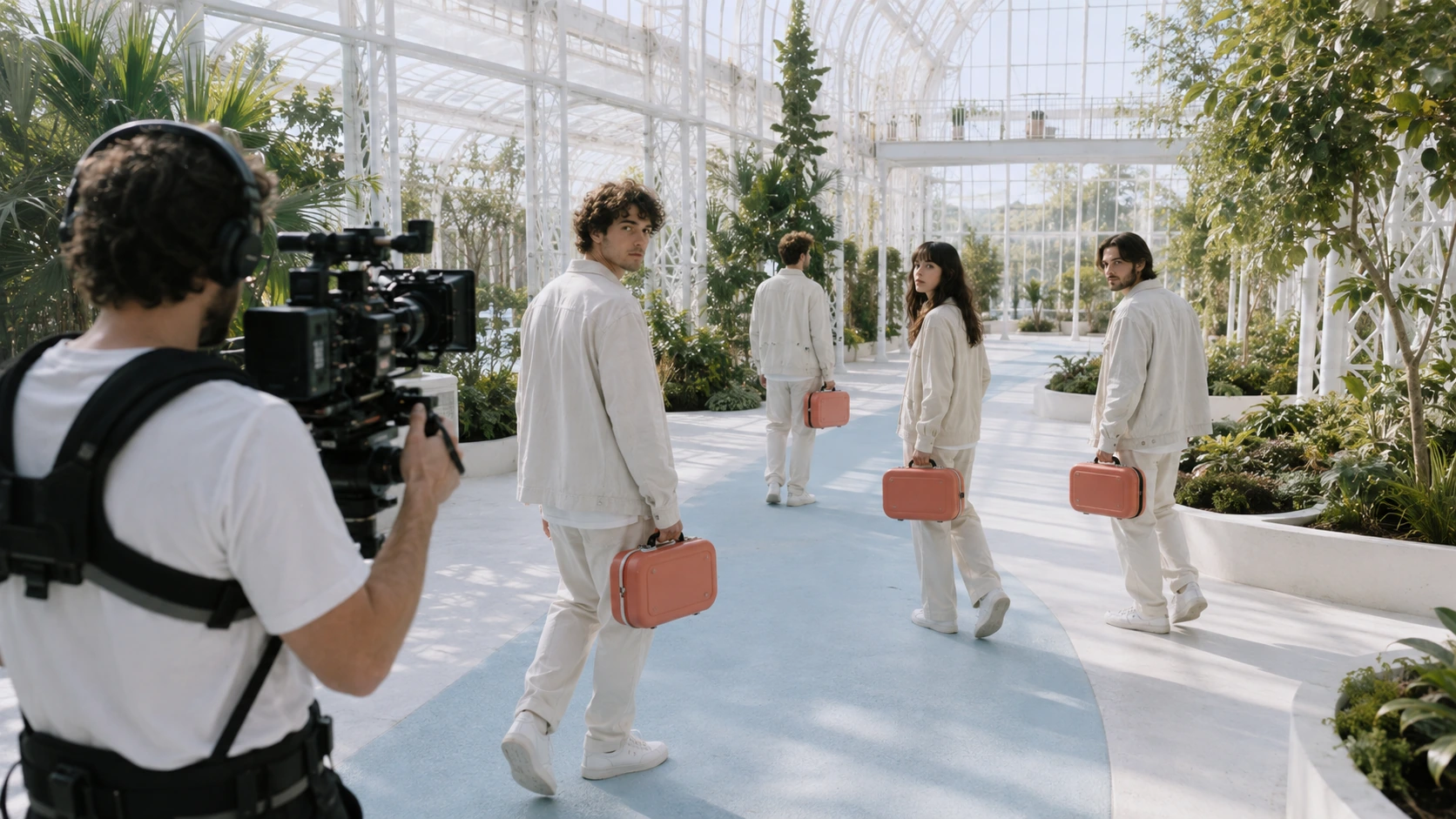
There’s a real pipeline between a first prompt and a finished generative video, several stages most people never see. Here’s what actually happens at each one.
Reference and prompt design
Before generation starts, character, world and tone references get established, visual anchors that every subsequent prompt and generation is checked against, rather than improvised scene by scene.
First-pass generation and selection
Generation rarely produces a single perfect result on the first attempt. Multiple passes get generated and reviewed against the locked reference, with the best result selected, not the first one.
Consistency and correction passes
Anything that drifts from the reference, a face, a costume, a lighting detail, gets regenerated rather than accepted. This is the step that separates a coherent finished piece from a set of disconnected clips, and it’s where most of the real production time goes.
Edit, grade, sound
Once scenes are locked, editing establishes pacing and structure, color grading locks in a consistent look, and sound design and music synchronization bring it to life, the same finishing work any produced video needs, generative or not.
Delivery and platform variants
The final stage is cutting the hero piece into whatever platform-specific versions were planned from the start, vertical, short-form, silent-autoplay, delivered as a complete set. See our studio page for more on how we work, or explore our services.
Related guides
This work at Leopati
Service: AI Video Production Services
Leave a comment