How Much Does AI Video Production Cost? A Production-Factor Guide
AI video production cost depends on production choices, not a single industry rate. Key drivers are duration, continuity (how consistent characters/environments must remain), resolution and output formats, complexity of visual effects and compositing, number of creative iterations, sound design and licensing, and whether live-action or custom assets are integrated. This guide explains each factor so you can scope and budget accurately.
Quick framing: why we don’t quote one price
AI tools can generate frames quickly, but production is still a creative pipeline: direction, concepting, iteration, quality control, compositing, sound, and final delivery. A 15-30 second proof-of-concept is a different production than a two-minute branded film with photo-real characters and complex visual effects. Instead of a universal price, use these production factors to predict scope.
Primary cost drivers (what changes scope fastest)
Duration and narrative structure: More seconds equals more frames, more continuity management, and more edit-time. A montage of short, unrelated vignettes costs less to keep consistent than a continuous single-shot scene with character acting and dialogue.
Continuity and character consistency: If characters, costumes, camera positions or world-building must remain identical across scenes, the production needs reference assets, style frames, and more iteration. Maintaining identity across a music video or branded series requires more engineering and creative oversight than standalone clips.
Resolution and output formats: Delivering 4K/6K or cinema DCI frames, multiple aspect ratios (portrait, square, widescreen), and ProRes masters increases rendering time and storage and may require different upscaling or denoising steps.
Visual effects, compositing and live-action integration: Green-screen replacements, rotoscoping, physics-driven simulations, and photoreal compositing add artist hours. Integrating live-action plates (actors on set) requires match-moving, color grading, and frame-by-frame cleanup.
Original assets and design work: Custom character rigs, bespoke props, original music, licensed tracks, or hand-illustrated elements are higher-cost line items than fully generated assets.
Revisions and creative iterations: Each round of revisions impacts schedule. Define a revision allowance (e.g., two rounds of creative notes) in the brief, open-ended iteration increases risk and cost.
Sound design and licensing: High-quality sound design, Foley, voice-over direction and music licensing or composition are necessary deliverables and should be scoped explicitly.
Turnaround and delivery complexity: Rush deadlines, multiple regional versions, subtitling, and localization increase staffing and delivery tasks.
Secondary considerations that add hidden cost
Render and compute time: Complex scenes, high frame-rates, or advanced denoising increase cloud compute and storage costs.
Legal and rights work: Clearances for likeness, music, or brand assets and deliverable warranties can require legal time or licensing fees.
Data and archival: Long-term storage, master delivery, and handover packages (editable project files, logs, style guides) are additional items to include in budget.
How to scope your brief so estimates are realistic
- Define the experience: one-off ad, music video, short film, or episodic content? Specify final duration and a master deliverable list (resolutions, codecs, aspect ratios).
- Describe continuity needs: Are characters new each scene or should they be consistent throughout? Provide references and brand assets when possible.
- List visual effects/integration needs: Green-screen plates, object removal, CG props or physics-heavy effects?
- Revisions policy: Set an expected number of revision rounds and who signs off at each stage.
- Sound: Will you supply stems/voiceovers or need full audio production and licensing?
- Deadlines and versions: Include target delivery dates and whether you need multiple language/subtitle versions.
A clear brief reduces unknowns and therefore contingency add-ons.
Example scoping scenarios (no rates, just differences)
- Short social clip (15-30s): Low continuity, single aspect ratio, limited visual effects, lower scope and fewer iteration cycles.
- Commercial spot (30-60s): Brand-approved characters or assets, multiple deliverables, professional sound design, moderate scope and cross-format delivery work.
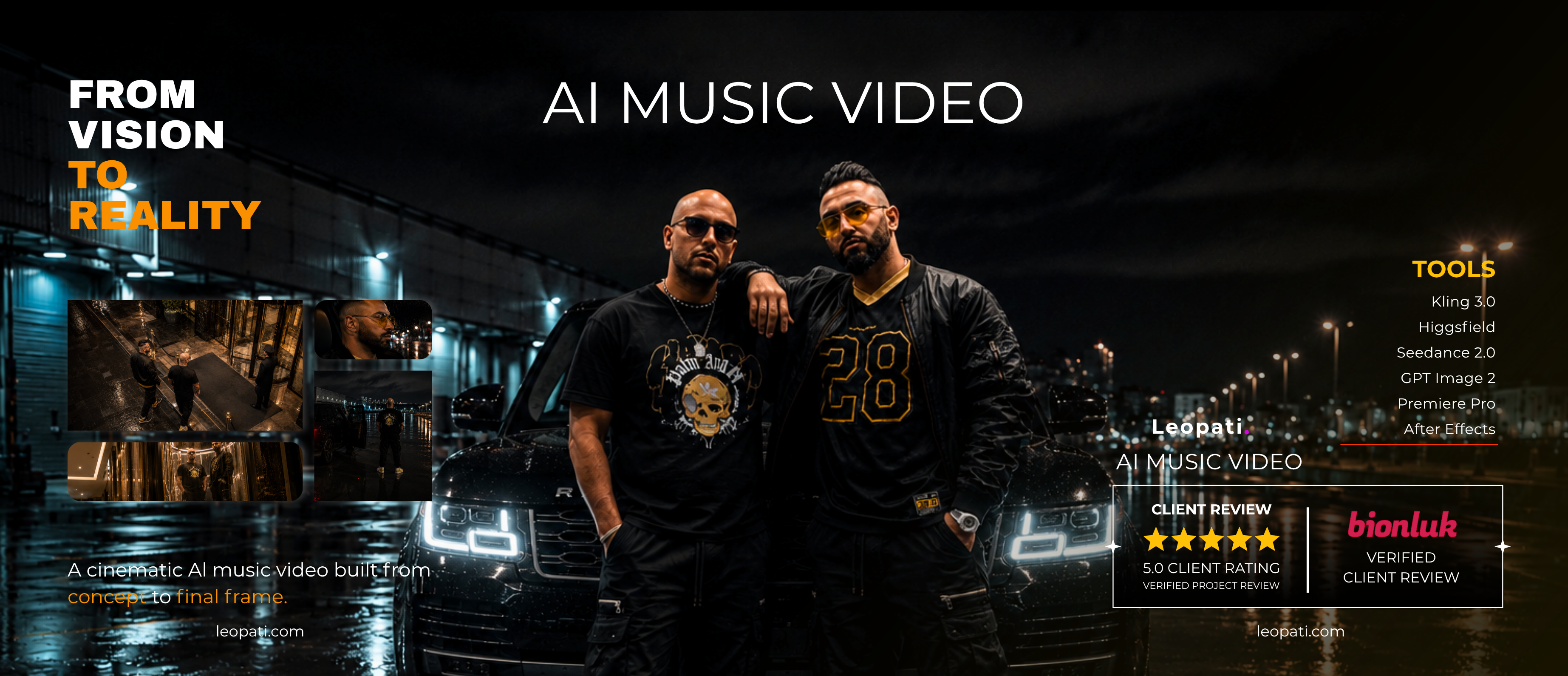
- Music video (2-5 min): High continuity (character performance), choreography or audio-reactive visuals, multiple scenes, higher iteration and compositing needs.
- Short film or episodic piece: Long-form continuity, complex visual effects, consistent actors/characters across scenes, highest production coordination and quality-control costs.
Practical tips to control cost
- Lock the creative direction early using mood boards and style frames.
- Limit the number of aspect ratios and final masters where possible.
- Agree on a fixed number of revision rounds and a clear sign-off process.
- Invest in solid reference material (photos, reference clips, voice samples) to reduce iterations.
- Bundle multiple deliverables into a single production run to capture economies of scale (e.g., one shoot period for multiple ad cuts).
Delivery checklist for your brief
- Final durations and all aspect ratios
- Required resolutions and codecs
- Number of revision rounds and approval points
- Live-action plates or reference assets provided (yes/no)
- Music/voice assets and licensing responsibilities
- Target delivery dates and localization needs
For help turning your brief into a clear scope and a tailored cost projection, Request a project estimate.
Further reading: AI video production, all services and what moves an AI music video budget.
Frequently asked questions
How much does project duration affect cost?
Duration multiplies frame count and editorial time. A longer runtime increases rendering, compositing, and review hours, so even with efficient AI generation, longer projects generally cost more due to continuity and QA work.
Will delivering in 4K always cost more than 1080p?
Yes, higher resolutions increase render time, storage and quality-control steps. They also require different post workflows (color grading, noise reduction), which add artist time.
Do I save money if I supply my own assets (music, logos, voice-over)?
Supplying cleared, production-ready assets typically reduces cost because it removes licensing, composition, or recording tasks from the scope. Assets still need to be validated for technical suitability.
Is AI production faster than traditional production?
AI can shorten content experimentation and certain asset generation steps, but a professional production still requires planning, iteration, and finishing (visual effects, sound, editorial). Faster ideation does not eliminate final-stage craft or quality control.
Why can’t you give a figure before reading the script?
Because the script decides the workload. A three-minute film with one character and a ten-minute film with several characters and locations are different productions, even at the same quality. We break the script down scene by scene first; that breakdown is what turns a budget range into a schedule and a figure you can rely on.