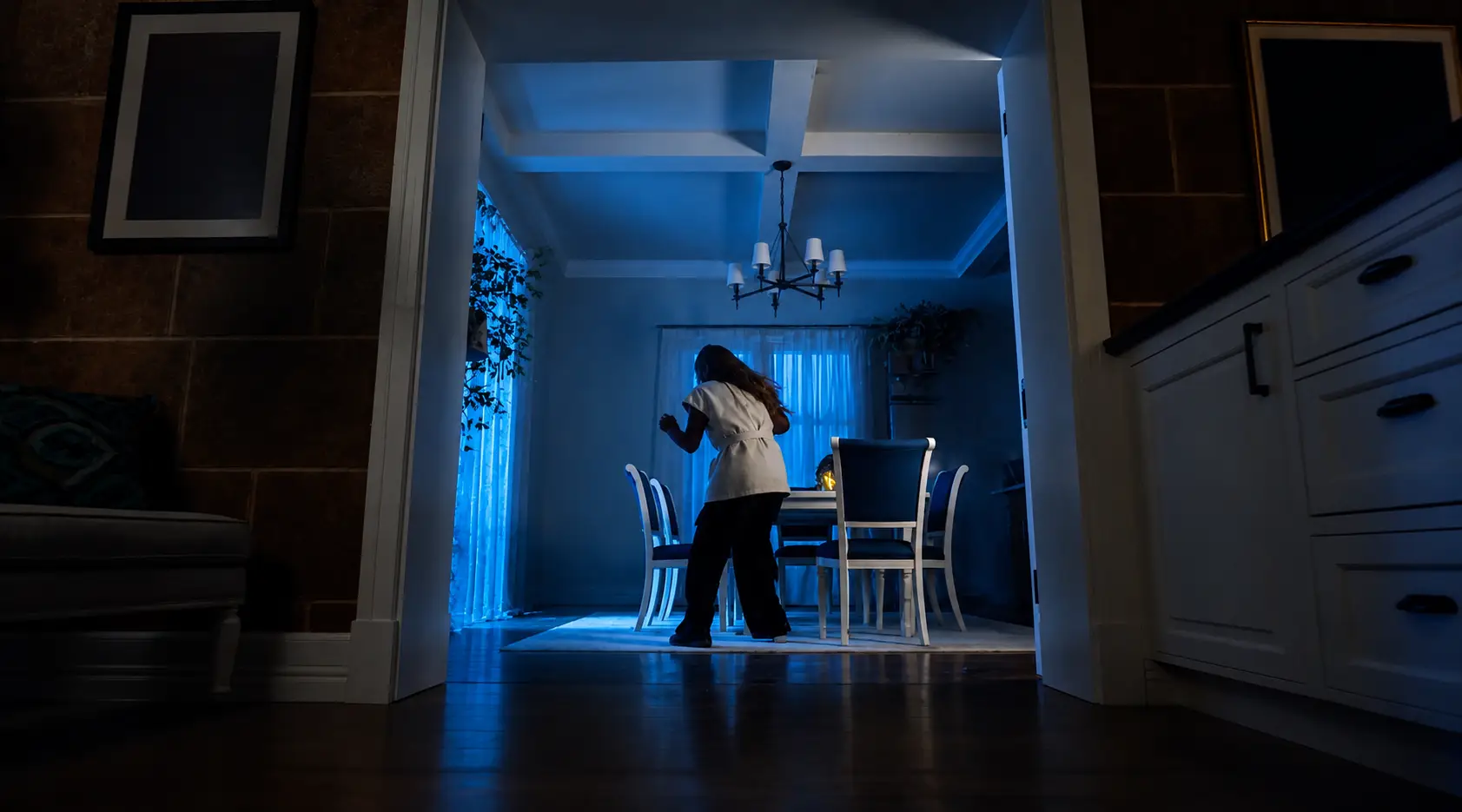
Short answer: an AI film screenplay still tells a story in scenes, but it has to do a second job: it becomes the reference every generated shot is checked against. That means describing what the camera sees more precisely than a normal script, fixing the visual constants of each character and location on the page, and writing scenes that can be built from short, controllable shots.
Why the page matters more in AI filmmaking
On a live-action set, a director, a cinematographer and actors fill the gaps between what is written and what is filmed. In AI production those gaps are filled by a model, and a model fills them with averages. Every vague line in the script becomes a decision someone has to make later, usually several times. A tighter page saves generation rounds, edit time and continuity fixes.
What an AI-ready script adds
- A visual bible at the top: each character’s age, face, hair, costume and the marks that must never change; each location’s time of day, weather and light.
- Shot intent, not only action: “close on her hands, the ring catches the window light” is producible; “she is nervous” is an acting note the model cannot direct.
- Scene length in shots: most generated shots are a few seconds long, so a scene is planned as a sequence of short beats that cut together.
- Continuity notes: wounds, dirt, props and costume changes written where they happen, so they are not reset between scenes.
What to write less of
Long unbroken takes, complex choreography between many characters, and dialogue-heavy scenes are the most expensive things to generate convincingly. They are not forbidden, but a script that relies on them needs a plan: hybrid live-action plates, voice-over instead of on-screen dialogue, or coverage built from reactions and inserts.
A working example
Our short film THYMOS tells its story largely through silence, body language and environment rather than dialogue. That choice was made on the page: it kept the character’s face, scars and costume consistent across the film and let the edit and sound carry the emotion.
From script to production
Once the screenplay is locked, it becomes a shot list, a set of reference frames and an animatic. Each generated shot is approved against the script’s visual bible. If you are preparing a project, our AI film production page explains how we move from script to final master, and you can send us your draft for a production read.
Frequently asked questions
Can I use my existing screenplay for an AI film?
Yes. Most scripts need a production pass rather than a rewrite: a visual bible for characters and locations, shot-level description for key scenes, and a plan for dialogue-heavy or crowded moments.
Should an AI film have less dialogue?
Not necessarily, but on-screen dialogue with accurate lip movement is one of the hardest things to generate well. Voice-over, reactions and inserts are often more convincing and cheaper.
How long should scenes be in an AI film script?
Plan scenes as sequences of short shots of a few seconds each. The scene can be as long as the story needs; it is the individual shot that should stay short and controllable.