AI Commercial Production for Brands: Product Films and Brand Spots
AI-assisted commercial production can deliver cinematic product films and brand spots that match brand identity while enabling rapid iteration and high-volume versioning. Below we explain when AI genuinely helps, which decisions need brand sign-off, and how production choices affect perception and campaign usefulness.
What AI is best for (and what it isn’t)
- Concept & look development: fast moodboards, multiple visual treatments, low-cost test frames to choose tone and framing.
- Scaling & versioning: platform cuts, language/local variants, A/B creative, and size-specific edits without full reshoots.
- Hard-to-shoot scenes: stylized worlds, seamless composites, and controlled lighting looks that would be costly or unsafe in live shoots.
- Cost-efficient hero visuals: when the product can be represented truthfully in CG/AI renders rather than requiring tactile macros of real materials.
When AI is not the right primary tool:
– Products that require demonstrable, testable physical performance (e.g., safety, clinical claims) should use verified live footage.
– Regulated categories (pharma, some health claims, certain financial statements) often require proof and legal clearance before any fictionalized depiction.
Approvals brands must own (clear checkpoints)
To protect brand integrity and legal compliance, secure formal approval for:
– Product truth: exact geometry, textures, finishes, screen UI, packaging copy, and any on-product claims.
– Marketing claims and copy: anything that suggests performance, ingredients, or specifications must be approved by legal or product teams.
– Brand assets: logos, color palettes, typography and usage rules from your brand guidelines.
– Likeness & talent: model releases or permission when recreating or referencing identifiable people.
– Music & sound: clearance or approved composers/sources.
– Final deliverables and variants: platforms, durations, aspect ratios and localisation scope.
A practical approval checklist we use at the creative handoff stage:
1. Final script and on-screen copy.
2. Product spec sheet (materials, dimensions, finishes).
3. Approved stills or reference photography for lookdev.
4. Brand toolkit (logo files, color codes, typography rules).
5. Legal checklist for regulated claims and model rights.
Connecting production choices to brand identity and campaign use
Every production choice signals something about the brand. Consider these trade-offs:
- Photorealism vs. stylized: Photoreal renders communicate reliability and product detail; stylized visuals can communicate heritage, lifestyle, or emotional positioning.
- Lighting & color grading: Hard light with high contrast reads premium and technical; soft, warm grading reads approachable and lifestyle-oriented.
- Movement & pacing: Fast rhythm and jump cuts help social platforms and younger audiences; longer, cinematic pacing suits prestige brand films and broadcast.
- Framing & context: Tight macro product frames emphasize craftsmanship; environmental shots place the product in an aspirational or real-world moment.
Choose the production path that serves the core campaign job-to-be-done: awareness, consideration, conversion or retention. Those goals determine whether you prioritize hyper-detail renders, aspirational worlds, or rapid A/B testing across formats.
How Leopati (studio approach) integrates AI without being a “generator”
Leopati operates as a directed production partner, not a self-service generator. That means:
– We establish creative direction and brand rules up front.
– We prototype lookdev frames and get brand approval before batch rendering.
– We handle compositing, color grading, sound design and versioning for platform delivery.
– We manage clearance, asset metadata and handoff-ready files to your campaign ops.
This studio workflow keeps the creative integrity of a traditional production while leveraging AI tools to reduce cost and increase iteration speed.
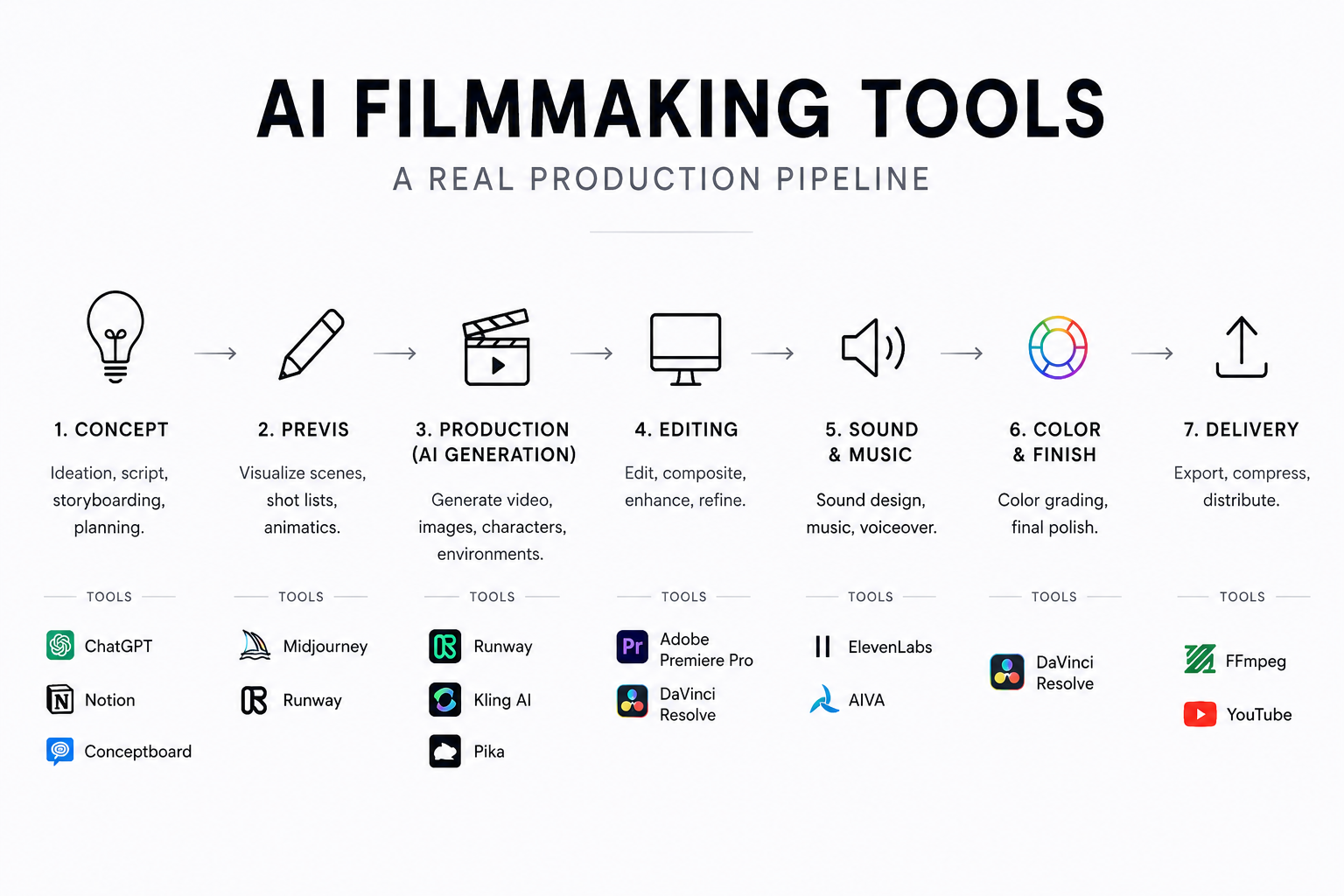
Production stages (high level)
- Discovery & brand truth sign-off.
- Creative treatments and two lookdev frames for approval.
- Approved script + storyboard → production schedule.
- Main render & integration passes; live-action inserts where required.
- Edit, grading, sound design, legal checks and final deliverables.
For examples of scoping and campaign workflows, see our parent service overview: AI Commercial Production and our broader Brands page.
Closing guidance for brand marketers
Start the project by agreeing the product-truth checklist and the list of final deliverables. That keeps creative experimentation safe: you get the speed and scale benefits of AI while protecting brand accuracy and legal compliance.
CTA: Plan an AI commercial — reach out to align creative direction, product truth and delivery specs.
Production checklist for AI commercial production for brands
Commercial work begins with a clear business and brand brief: audience, message, product truth, mandatory claims, visual identity and the placements the final assets must serve. For AI Commercial Production for Brands: Product Films and Brand Spots, these constraints should be recorded before the first generation pass so the creative ambition remains aligned with approvals and campaign requirements.
The review process should include brand, legal and client approval gates, product or talent accuracy checks, platform-specific cutdowns and a documented final-delivery list. AI can expand the number of creative directions a team can test, but a professional production workflow still needs version control, consistency checks and a dependable handoff. The strongest result is a campaign asset that is imaginative, on-brand and ready to publish.
What to confirm before production
Every brief benefits from an explicit decision record. Confirm the audience, the intended viewing context, the emotional or commercial outcome, the references that define the visual language, and the parts of the image that must be exact. Then identify the elements that can remain exploratory. This makes review faster because the team knows which changes protect the brief and which changes are simply aesthetic alternatives.
It is also useful to define what “finished” means before work begins. That may include a locked duration, a clean master, social cutdowns, subtitles, audio stems, colour-managed exports, a rights and likeness review, or an editable handoff. Clear acceptance criteria reduce unnecessary generation cycles and make AI production easier to compare with a conventional production workflow.
Frequently asked questions
When does AI genuinely help a brand film?
AI helps when you need rapid exploration of visual treatments, high-volume versioning (platform cuts/localisation), stylised worlds that would be expensive to shoot, or consistent lookdev across multiple assets. It’s best used where the product’s appearance can be represented accurately in renders or composites; if you need demonstrable physical performance, a live-action approach is usually required.
What needs brand approval before AI production begins?
Brands must approve product truth (specs, materials, packaging copy), on-screen claims and legal copy, brand assets (logos, color, typography), model releases for likenesses, and the final list of deliverables (formats, durations and localisation). Approvals protect brand integrity and reduce rework during later production stages.
Who owns the final assets and what should I check in contracts?
Ownership and usage rights depend on your contract. Confirm that the agreement assigns full commercial rights for the final deliverables, specifies permitted platforms and territories, and clarifies any third-party tool or model licensing requirements. Also check clauses on revisibility and long-term storage of source files.
How are regulated claims and compliance handled in AI commercial production?
Regulated claims (health, safety, financial, etc.) require pre-approved copy and often supporting documentation. AI-generated visuals should not imply unverified performance. Include legal and regulatory stakeholders in the approval loop before lookdev and before final release to avoid compliance risks.