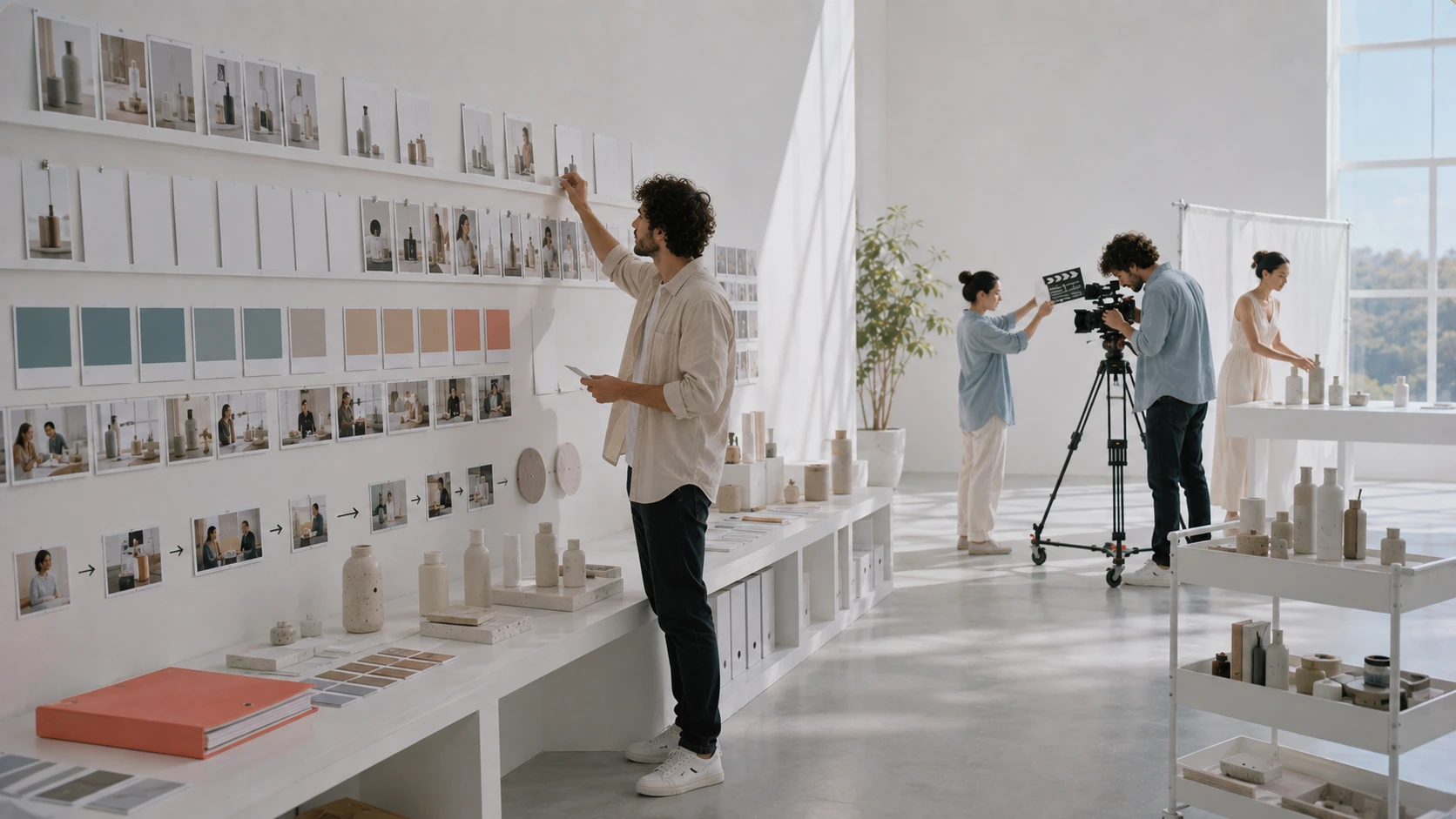
The strongest AI commercial campaigns don’t stop at one video — they pair it with product visuals that share the exact same look. Here’s why stills and motion usually get produced separately, and why they shouldn’t be.
Why stills and video usually get split
Product photography and video production are traditionally separate disciplines with separate vendors, separate shoots, and often a visibly different look between a brand’s static ads and its video ads. That split is a production-convenience artifact, not something a customer should ever notice or care about.
Keeping one visual language across both
The same locked reference — color, lighting language, product presentation — that holds a character or product consistent across an AI commercial‘s scenes can extend to product stills too, so a customer sees the same visual world whether they’re looking at a static ad or a video.
Sequencing: which comes first
Deciding the visual language during stills production, then carrying it into video, tends to work better than the reverse — a still image is a simpler, faster way to lock a look before committing to a full motion production built around it.
Where Product Visuals fits in
Leopati’s Product Visuals service — marketplace-ready product images and premium product scenes — pairs naturally with AI commercial production for exactly this reason: one studio, one visual language, across stills and motion.
A campaign checklist
Before starting either piece, lock: product presentation angle, color and lighting treatment, and background/environment style. Bring both to the same studio, or at minimum the same reference sheet, so nothing drifts between them. Tell us about your campaign if you’re planning both.